Chronic total occlusion (CTO), defined as a true complete (Thrombolysis in Myocardial Infarction [TIMI] flow 0) or a functional near-complete (TIMI flow 1) occlusion persisting for at least three months,1 presents as a challenging but recurrent subtype of coronary artery disease. Previous studies have reported that approximately 20% of patients undergoing coronary angiography have a CTO, and this proportion is even higher in patients with diabetes or heart failure, reaching up to 40%.2 Since the occlusions are frequently heavily calcified, their rigidity often hinders recanalisation and stent expansion, rendering percutaneous coronary intervention (PCI) for a CTO technically demanding. In fact, PCI used to have only around a 50% success rate, such that it was not the treatment of choice for CTO revascularisation.3 However, optimal medical therapy was proven inferior to an invasive strategy,4 and coronary artery bypass grafting is exceedingly invasive, results in higher costs, and necessitates a longer recovery time. Recent technical advances have improved the success rate of CTO PCI to around 85% in dedicated registries,5 and several calcium-modifying strategies have been developed. However, these strategies have limited effectiveness on the deep calcifications frequently found in CTOs and carry a risk of procedural complications such as perforation. Thus, there remains a significant gap in evidence for the treatment of CTOs, particularly in relation to invasive-strategy options.
Derived from the acoustic pressure technology established to treat renal calculi, intravascular lithotripsy (IVL) generates a shockwave circumferentially and transmurally via emitters enclosed within a sterile catheter, forming fractures within high-density tissues, allowing improved stent expansion with minimal effects on soft tissue.6 The feasibility of IVL was first introduced by Brinton et al in the DISRUPT CAD I study,7 in which this technology was implemented for lesions with ≥50% stenosis. Subsequently, the DISRUPT CAD II-IV trials were published,8910 yielding promising results with minimal adverse events. These data, however, were derived from a majority non-CTO population, such that for CTO specifically, there is still a lack of robust evidence supporting the effectiveness and safety of IVL as reflected in its procedural and clinical outcomes.
Thus, this meta-analysis aimed to review the procedural and clinical outcomes of IVL specifically for CTO lesions. The results were intended to be valuable for considering the applicability of IVL as an alternative or adjunctive option in CTO PCI, which could improve the prognosis of patients while minimising complications.
Methods
This study was conducted following the Cochrane Handbook for Systematic Reviews of Intervention v6.5,11 reported according to the Preferred Reporting Items for Systematic Reviews and Meta-Analysis (PRISMA) statement,12 and registered in PROSPERO (CRD420251105648).13
Search strategy
The search was conducted by three investigators experienced in evidence synthesis. We searched the following databases from inception until January 2025: Scopus, PubMed, Cochrane, ProQuest, ClinicalKey, and EBSCOhost. The search strategy included combinations of keywords and Medical Subject Headings related to IVL and CTO, as outlined in Table 1. We used the database-specific functions, including explosion and keyword mapping where applicable. The search was conducted using each platform’s native search engine; no external software was used.
To identify additional eligible studies, we conducted manual handsearching of the reference lists of included articles and relevant reviews. No language restrictions were applied. Articles published in languages other than English were translated using online tools and validated by bilingual coauthors. We also attempted to identify unpublished studies by screening conference abstracts and contacting corresponding authors if additional data were required.
All citations were imported and screened using EndNote X9 (Clarivate). Titles and abstracts deemed potentially eligible by either reviewer were retrieved for full-text review. Any discrepancies in study inclusion were resolved by consensus among the authors.
Table 1. Databases and keywords.
| Database | Keyword | Hits | |
|---|---|---|---|
| ProQuest | (intravascular lithotripsy OR IVL OR shockwave intravascular lithotripsy) AND (chronic total occlusion) AND (coronary OR heart) | 1,157 | |
| ClinicalKey | (intravascular lithotripsy OR IVL OR shockwave intravascular lithotripsy) AND (chronic total occlusion) AND (coronary OR heart) | 227 | |
| EBSCOhost | (intravascular lithotripsy OR IVL OR shockwave intravascular lithotripsy) AND (chronic total occlusion) AND (coronary artery disease OR cad OR coronary heart disease) | 14 | |
| PubMed | (intravascular lithotripsy OR IVL OR shockwave intravascular lithotripsy) AND (chronic total occlusion) AND (coronary OR “heart” [MeSH Terms] OR “Coronary Disease” [MeSH Terms] OR “Coronary Thrombosis” [MeSH Terms]) | 29 | |
| Cochrane | 19* | ||
| #1 MeSH descriptor: [Lithotripsy] explode all trees | 936 | ||
| #2 intravascular lithotripsy | 52 | ||
| #3 shockwave lithotripsy | 582 | ||
| #4 percutaneous lithotripsy | 490 | ||
| #5 IVL | 92 | ||
| #6 #1 OR #2 OR #3 OR #4 OR #5 | 1,658 | ||
| #7 chronic total occlusion | 1,062 | ||
| #8 CTO | 496 | ||
| #9 #7 OR #8 | 1,274 | ||
| #10 MeSH descriptor: [Coronary Vessels] explode all trees | 2,104 | ||
| #11 MeSH descriptor: [Heart] explode all trees | 9,498 | ||
| #12 MeSH descriptor: [Coronary Disease] explode all trees | 19,057 | ||
| #13 MeSH descriptor: [Coronary Thrombosis] explode all trees | 658 | ||
| #14 #10 OR #11 OR #12 OR #13 | 28,583 | ||
| #15 #5 AND (#9 OR #14) | 19 | ||
| Scopus | ( ( lithotripsy ) OR ( ivl ) OR ( shockwave AND intravascular AND lithotripsy ) ) AND ( ( chronic AND total AND occlusion ) OR ( cto ) ) AND ( ( coronary ) OR ( “heart” [mesh AND terms] ) OR ( “Coronary Disease” [mesh AND terms] ) OR ( “Coronary Thrombosis” [mesh AND terms] ) ) | ||
| *Refers to the total final yield of the Cochrane search across all lines, as obtained from the final combined search (#15: #5 AND [#9 OR #14]). CAD: coronary artery disease; CTO: chronic total occlusion; IVL: intravascular lithotripsy; MeSH: Medical Subject Heading | |||
Study eligibility criteria
Eligible studies were considered appropriate for inclusion, provided they met the following criteria: (1) adult patients with coronary chronic total occlusion (defined as TIMI flow 0 or 1 with an estimated duration ≥3 months); (2) intervention using IVL during PCI, either as a standalone treatment or in combination with other modalities; (3) reporting at least one of the following predefined primary outcomes: technical success (residual stenosis <30% with restoration of TIMI 3 flow in the target vessel), procedural success (the attainment of technical success in the absence of major adverse cardiovascular events [MACE] during the index hospitalisation), or at least one of the following secondary outcomes: mortality; MACE including all-cause mortality, reinfarction, recurrent ischaemic symptoms necessitating urgent repeat revascularisation, or stroke; perforation (disruption of the coronary wall, as seen angiographically by contrast flow outside the coronary arteries); mean procedural time; and mean contrast volume. Studies with follow-up times ranging from in-hospital to the longest available duration were all included. Both randomised and non-randomised studies were considered. Exclusion criteria were as follows: (1) preclinical or laboratory studies; (2) conference abstracts or studies without full-text availability; (3) ongoing or incomplete studies at the time of retrieval; and (4) studies involving non-CTO, non-coronary artery lesions.
For this review, technical success was defined as residual stenosis <30% with restoration of TIMI 3 flow in the target vessel, in accordance with contemporary CTO PCI consensus documents. When the original study definition matched these criteria, data were mapped directly. Studies that relied on other threshold parameters (such as operator-defined PCI success with good angiographic outcomes) were evaluated individually and mapped only if the original study explicitly described outcomes equivalent to the non-flow-limiting <30% stenosis/TIMI 3 construct and normal distal flow.
Data extraction and risk-of-bias assessment
Two independent reviewers extracted data into prepiloted Excel forms (MS Excel for Mac [Microsoft]), including (1) first author and year; (2) study design and location; (3) sample size and patient characteristics; (4) procedural details such as IVL pulses, strategy, and adjunctive therapies; and (5) primary (technical/procedural success) and secondary outcomes (MACE, mortality, perforation, mean procedural time, and contrast volume). Disagreements were resolved by consensus. Data coding followed a standardised procedure with explicit definitions for each variable to ensure consistency.
Blinding was not applied during data extraction, but cross-validation was performed by a third reviewer to ensure classification accuracy. Interrater reliability was assessed informally through agreement rates; discrepancies were few and resolved through discussion.
The quality of the included studies was assessed using the Risk Of Bias In Non-randomized Studies of Interventions (ROBINS-I) tool,14 which evaluates bias across the following seven domains: participant selection, intervention classification, deviations from intended interventions, confounding, outcome measurement, missing data, and reported results selection. Meanwhile, for case series, the JBI tool (JBI) was used, with its 10 questions assessing internal validity, selection, confounding, and information bias, as well as clear reporting.15 Two reviewers performed quality assessment, and any discrepancies were resolved by consensus.
Statistical analysis
Statistical analyses were conducted using the meta package in RStudio, version 2023.03.0+386 (Posit software). An inverse variance, random-effects model was used, based on the assumption of both within- and between-study heterogeneity, which provides more conservative and generalisable estimates than fixed-effect models. This model accounted for clinical and methodological differences across studies and allowed for extrapolation beyond the sampled studies. Justification for the random-effects approach was based on the anticipated diversity in patient populations, IVL techniques, and outcome definitions.
Pooled effect sizes were expressed as mean differences or proportions, using the Freeman-Tukey double arcsine transformation when appropriate to stabilise variances for proportions approaching 0% or 100%.
Heterogeneity was assessed using Cochran’s Q test and quantified by I² statistics; it was classified as low (<25%), moderate (25-50%), or high (>50%). To address potential heterogeneity, subgroup analyses were conducted based on factors such as study design, duration of follow-up, and the Japanese chronic total occlusion (J-CTO) score.16 The J-CTO subgroup cutoff was determined a priori at a score of >2.8, representing a continuous approximation of the established J-CTO category17 which defines high lesion complexity in the original J-CTO score and subsequent CTO registries. The threshold was applied consistently across all applicable analyses. A sensitivity analysis using Duval and Tweedie’s trim-and-fill method was conducted to evaluate the influence of publication bias and outliers, and leave-one-out analyses were conducted to investigate internal validity.18 All statistical procedures have been described in detail to allow for replication, and the appropriate summary tables and forest plots have been included to illustrate findings. We included studies in which intravascular lithotripsy was used as a standalone modality as well as those in which it was employed alongside other calcium-modification devices; therefore, the observed effects may represent the influence of IVL in conjunction with adjunctive interventions rather than the isolated impact of IVL alone. However, due to the limited number of studies and heterogeneity in reporting, a formal meta-regression was not feasible.
Results
Study selection
Figure 1 explains the screening process for the included studies. After the initial search, 49 duplicate records were removed, yielding 1,830 studies, of which 741 were excluded during title and abstract screening. Of the remaining studies, the full text was unavailable for 2, and 34 had not yet been completed at the time of the search. Subsequently, 655 studies involved non-CTO lesions, 212 involved non-coronary arteries, 105 did not report quantitative primary or secondary outcomes, and 76 had inappropriate study design. Ultimately, 5 studies were finally included in the quantitative synthesis of this review.
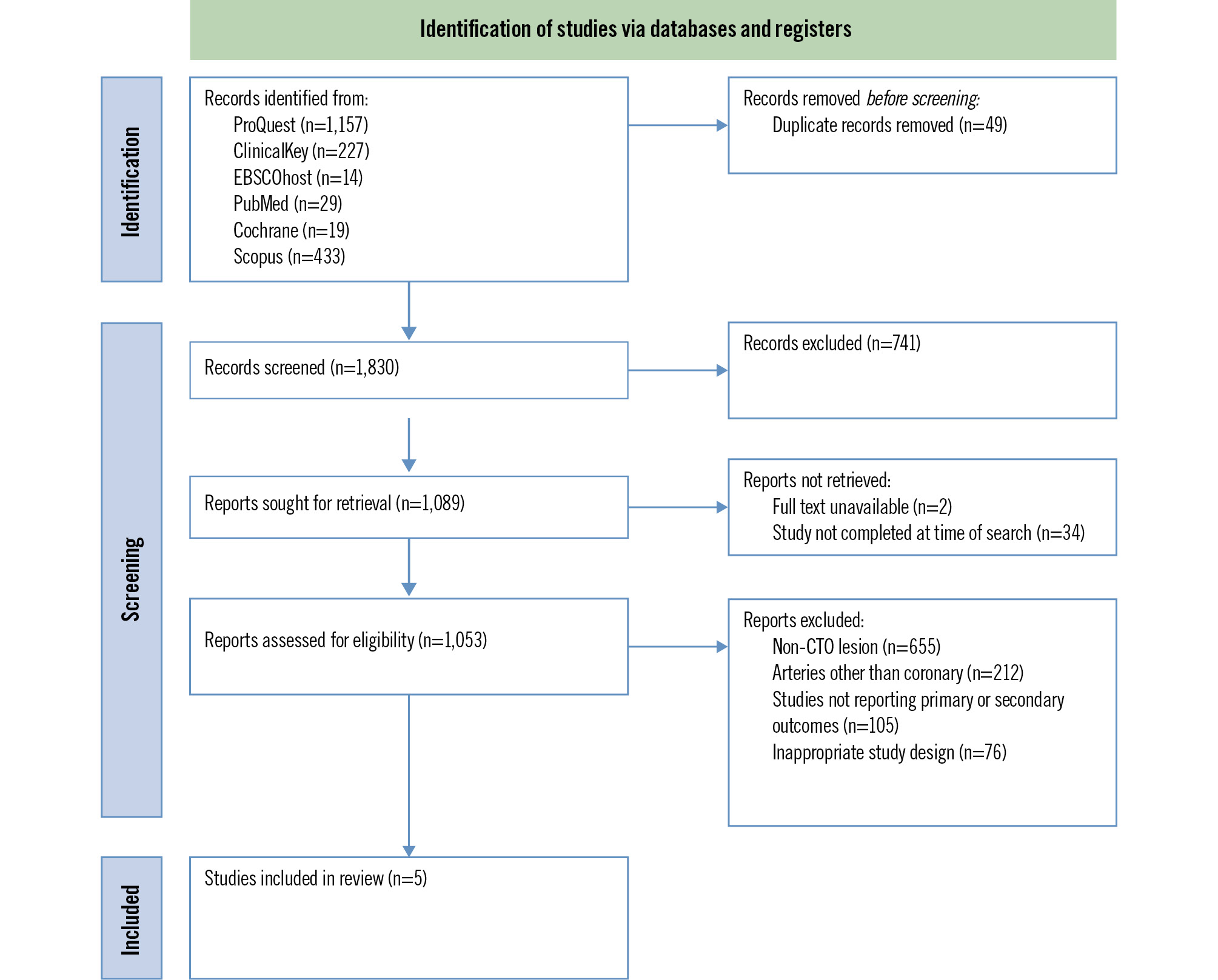
Figure 1. Search strategy. CTO: chronic total occlusion
Study characteristics
The five included studies had a total of 611 participants undergoing IVL for a CTO. The studies were published between 2021 and 2024; two were prospective cohort studies, two were retrospective, and one was a case series.1920212223 The mean J-CTO score for lesions was ≤2.8 in 3 studies and >2.8 in 2 studies, 1 of which had a mean score of >3. Only the study by Oliveri et al reported the eccentricity index (EI). Four studies combined IVL with other calcium modification devices, while one performed IVL only. One study’s maximum follow-up was the hospital stay, while the other four studies followed patient outcomes beyond discharge. The characteristics of the included studies are available in Supplementary Table 1.
Quality of studies
For the studies assessed with ROBINS-I, the analysis revealed that all the studies had a moderate risk of bias (Figure 2, Supplementary Table 2). Oliveri et al’s study was classified as having a moderate risk of bias as no blinding was performed; however, the measurement of outcomes such as residual stenosis, which determines technical success, was unlikely to be affected by knowledge of the intervention due to the use of objective tools such as intravascular ultrasound or quantitative coronary angiography. The study by Kostantinis et al had a prospective design but no protocol registration, and therefore, no prespecified analysis plan was available, leading to possible bias in the selection of reported results. The study by Carvalho et al was a retrospective study performed in multiple centres, and despite some concerns in the bias due to confounding, propensity score matching was performed, and multiple imputation was used to tackle missing data. However, the choice of intervention – rotational atherectomy or IVL – was up to the interventionist’s discretion, leading to possible bias in the classification of intervention. The study by Ôksnes et al involved site-level adjudication, in which outcomes were assessed locally by an unblinded CTO team, leading to possible bias in outcome measurement. The case series by Rola et al involved a small number of participants, and while the reporting of clinical information and follow-up results were clear, they did not apply consecutive inclusion of participants, leading to a moderate risk of bias, based on JBI analysis (Figure 2).
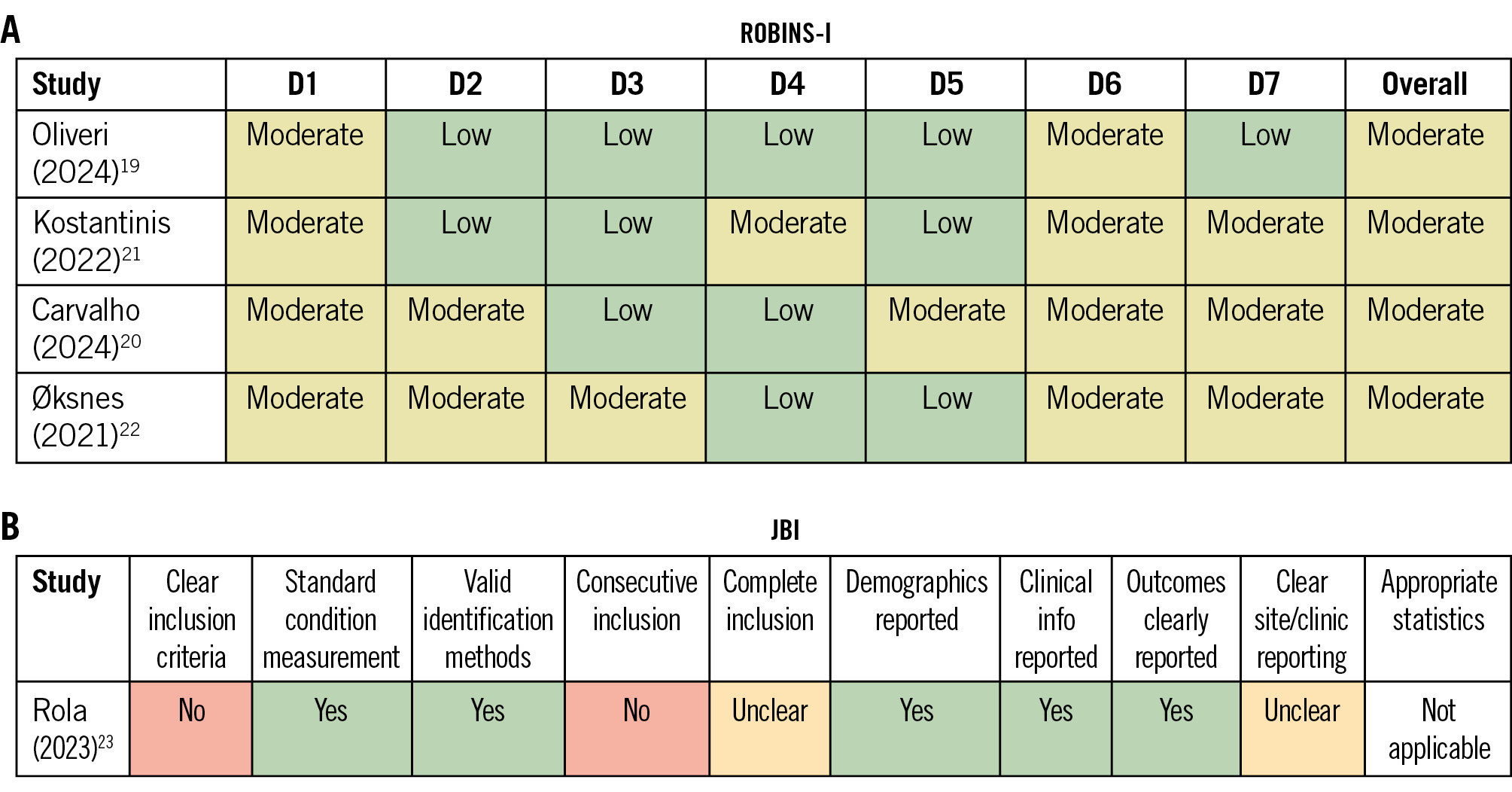
Figure 2. Quality of studies using ROBINS-I and JBI for case series. A) Quality of studies using ROBINS-I; and (B) quality of studies using JBI for case series. D1: bias due to confounding; D2: bias due to the selection of participants; D3: bias in the classification of interventions; D4: bias due to deviations from the intended interventions; D5: bias due to missing data; D6: bias in the measurement of outcomes; D7: bias in the selection of the reported result; ROBINS-I: Risk Of Bias In Non-randomized Studies of Interventions
Study outcomes
A summary of the outcomes is available in Table 2. Details are available in Supplementary Table 3.
Table 2. Summary of outcomes.
| Outcomes | Pooled effect and heterogeneity, sensitivity analysis | Subgroup analysis | Sensitivity analysis – pooled effect after removal of the cited study |
|---|---|---|---|
| Technical success | 97% (95% CI: 94-100%); I²=18% | Study design (p=0.04) Prospective: 93% (95% CI: 88-97%); I²=0% Non-prospective: 99% (95% CI: 98-100%); I²=0% J-CTO scores (p=0.05) ≤2.8: 96% (95% CI: 90-99%); I²=0% >2.8: 97% (95% CI: 96-99%); I²=0% | Oliveri et al19 98% (95% CI: 96-100%); I²=0% |
| Procedural success | 94% (95% CI: 90-97%); I²=27% | Study design (p=0.03) Prospective: 89% (95% CI: 82-94%); I²=0% Non-prospective: 97% (95% CI: 95-99%); I²=0% J-CTO scores (p=0.04) ≤2.8: 91% (95% CI: 85-96%); I²=0% >2.8: 95% (95% CI: 93-97%); I²=0% | Kostantinis et al21 97% (95% CI: 94-98%); I²=0% |
| MACE | 3% (95% CI: 1-6%); I²=16% | Study design (p=0.62) Prospective: 5% (95% CI: 1-12%); I²=27% Non-prospective: 2% (95% CI: 0-6%); I²=17% Follow-up (p=0.04) Discharge: 6% (95% CI: 1-12%); I²=0% In-hospital: 3% (95% CI: 2-5%); I²=0% J-CTO scores (p=0.70) ≤2.8: 3% (95% CI: 0-8%); I²=0% >2.8: 4% (95% CI: 1-9%); I²=58% | Oliveri et al19 2% (95% CI: 0-4%); I²=0% |
| Mortality | 0% (95% CI: 0-2%); I²=36% | Study design (p=0.18) Prospective: 3% (95% CI: 0-9%); I²=47% Non-prospective: 0% (95% CI: 0-0%); I²=0% Follow-up (p=0.73) Discharge: 0% (95% CI: 0-52%) In-hospital: 1% (95% CI: 0-4%); I²=55% J-CTO scores (p=0.13) ≤2.8: 1% (95% CI: 0-6%); I²=0% >2.8: 1% (95% CI: 0-2%) | Oliveri et al19 0% (95% CI: 0-0%); I²=0% |
| Perforation | 5% (95% CI: 1-9%); I²=54% | Study design (p=0.55) Prospective: 8% (95% CI: 3-13%); I²=0% Non-prospective: 3% (95% CI: 0-11%); I²=62% J-CTO scores (p=0.68) ≤2.8: 5% (95% CI: 1-11%); I²=0% >2.8: 6% (95% CI: 0-16%); I²=81% | Øksnes et al22 3% (95% CI: 0-8%); I²=37% |
| Mean procedural time, mins | 122.94 (95% CI: 102.24-143.64); I²=90% | ||
| Mean contrast volume, mL | 154 (95% CI: 140.84-167.16); I²=69% | ||
| CI: confidence interval; J-CTO: Japanese chronic total occlusion: MACE: major adverse cardiovascular events | |||
Technical success
Statistical analysis showed that IVL for CTO yielded 97% pooled technical success (95% confidence interval [CI]: 94-100%), with low heterogeneity (I²=18%). Trim-and-fill analysis revealed that by removing the Oliveri et al study, heterogeneity was reduced to 0%, with the pooled proportion yielding 98% (95% CI: 96-100%). The J-CTO subgroup difference was borderline significant (p=0.05) (Figure 3, Supplementary Figure 1). Subgroup analysis based on study design showed that prospective studies yielded a lower percentage of technical success compared to non-prospective studies (p=0.04).
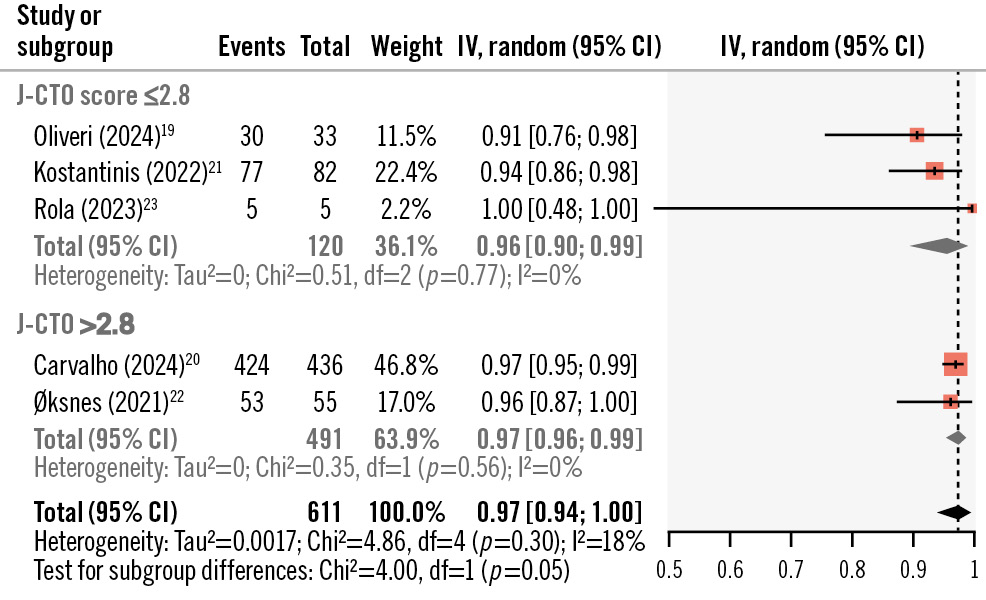
Figure 3. Subgroup analysis of technical success based on J-CTO score. CI: confidence interval; J-CTO: Japanese chronic total occlusion
Procedural success
Procedural success yielded 94% as a pooled percentage (95% CI: 90-97%), with moderate heterogeneity (I²=27%). Trimming the study by Kostantinis et al reduced the I² heterogeneity to 0%, with the pooled value yielding 97% (95% CI: 94-98%). As with technical success, prospective studies yielded a lower pooled value compared with non-prospective studies (p=0.03). Studies with a J-CTO score >2.8 had a higher rate of success (95% [95% CI: 93-97%] vs 91% [95% CI: 85-96%]; p=0.04) (Figure 4, Supplementary Figure 2).
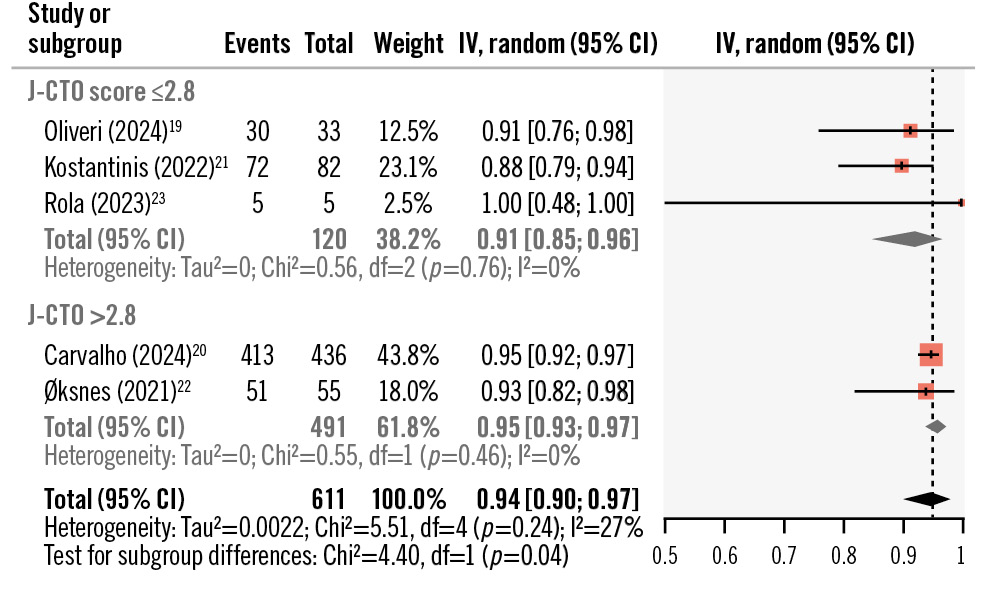
Figure 4. Subgroup analysis of procedural success based on J-CTO score. CI: confidence interval; J-CTO: Japanese chronic total occlusion
Major adverse cardiovascular events
Overall, 3% of patients (95% CI: 1-6%) experienced MACE within the included studies. The study by Oliveri et al was again the source of heterogeneity, as its removal reduced the I² value from 16% to 0%. Subgroup analysis revealed that the study design did not have any impact on MACE (p=0.62). Conversely, the duration of follow-up revealed a significant difference on subgroup analysis (p=0.04). After discharge, the rate of MACE was higher (6% [95% CI: 1-12%]) than in hospital (3% [95% CI: 2-5%]). J-CTO score subgroups did not show any significant difference between them (Figure 5, Supplementary Figure 3).
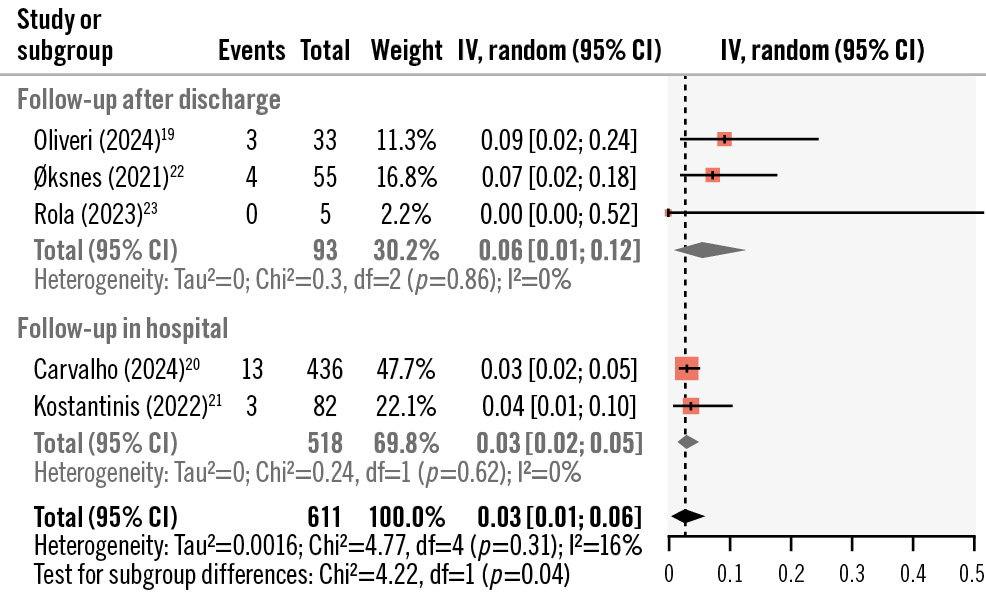
Figure 5. Forest plot of MACE based on follow-up. CI: confidence interval; MACE: major adverse cardiovascular events
Mortality
Mortality yielded 0% (95% CI: 0-2%) as a pooled proportion, with removal of the study by Oliveri et al reducing the I² value from 36% to 0%. Neither follow-up, study design, nor J-CTO subgroups revealed any significant difference. However, it is to be noted that the longest follow-up post-discharge for mortality was reported in a single small study (n=5), with no observed events but a wide confidence interval of 0% (95% CI: 0-52%) (Figure 6A, Supplementary Figure 4).
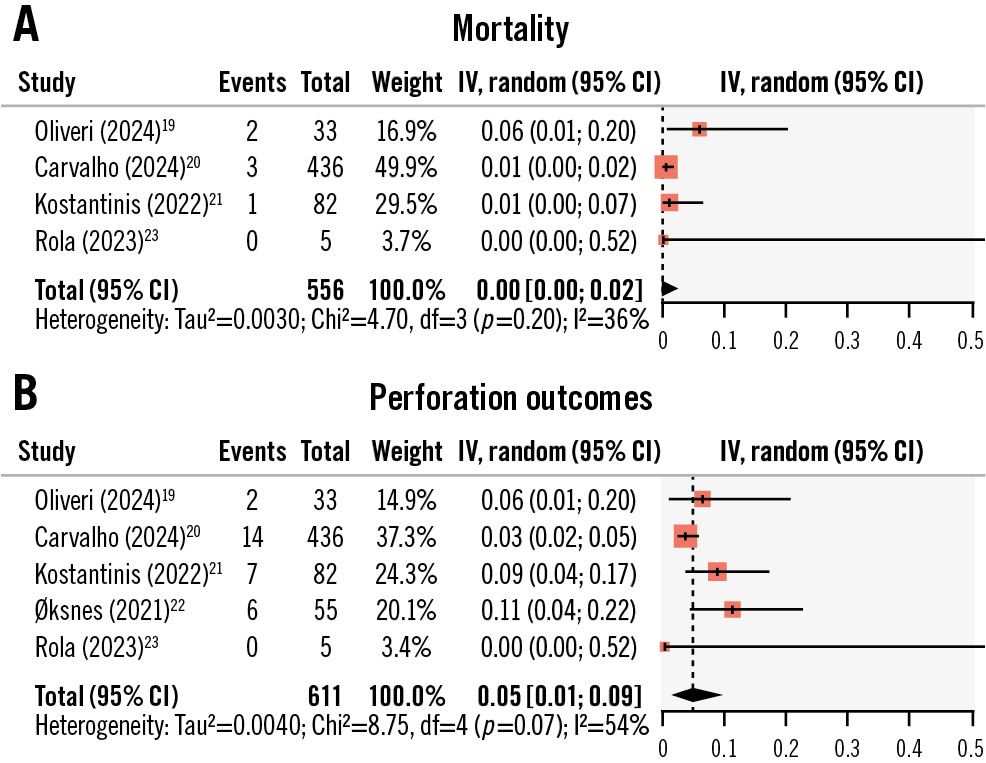
Figure 6. Forest plot of mortality and perforation outcomes. A) Mortality; (B) perforation outcomes. CI: confidence interval
Perforation as a complication
Perforation occurred in 5% of patients overall (95% CI: 1-9%), with substantial heterogeneity (I²=54%). Sensitivity analysis revealed the study by Ôksnes et al as a potential source of heterogeneity, as its trimming reduced heterogeneity to I²=37%, with the pooled proportion at 3% (95% CI: 0-8%). Neither the subgroup analysis by study design (p=0.55) nor by J-CTO score (p=0.68) revealed any significant difference (Figure 6B, Supplementary Figure 5).
Other secondary outcomes
The pooled mean procedural time for the included studies in which it was reported was 122.94 minutes (95% CI: 102.24-143.64 minutes). Meanwhile, the mean contrast volume was 154 mL (95% CI: 140.84-167.16 mL). As only a small number of studies reported these outcomes, we did not perform subgroup analyses (Supplementary Figure 6).
Leave-one-out analyses
Given the small number of studies (n=5), funnel plots were considered unreliable and were therefore not interpreted. Instead, we conducted a leave-one-out sensitivity analysis, as seen in Supplementary Figure 7, which demonstrated that the overall findings were not driven by any single study.
Discussion
Strategies in CTO PCI
CTO PCI has been excluded from previous clinical trials due to its procedural complexity, risk of complications, and low success rate.24 Various strategic integrations have been developed to tackle CTOs, including crossing strategies, devices to aid in uncrossable/undilatable lesions, and calcium modification devices. While anterograde crossing from true lumen to true lumen is the most favourable, other crossing techniques, such as antegrade dissection and re-entry to the true lumen distal to the occlusion or retrograde crossing of the distal cap via collaterals, also exist. These require expertise from the interventionist and therefore lead to outcomes that are, to some degree, operator dependent. Additionally, there are devices such as rotational/orbital atherectomy, laser excimer, cutting/scoring balloons, and IVL. Rotational/orbital atherectomy is useful in superficial calcium modification, but it is less effective for deep calcium, and it is unsuitable for eccentric or tortuous anatomy due to guidewire bias that could cause eccentric ablation or trauma to the vessels, as well as its thermal energy and fast burr which lead to a high risk of perforation.7 Excimer lasers are also suitable for surface ablation but they cannot reach deep lesions,25 and the various frequencies of the laser require a high learning curve for the operator. Cutting/scoring balloons also have reduced effectiveness in lesions with severe and deep calcifications; they are more suitable for focal fibrous plaques. Thus, IVL emerges as a novel option that allows deep calcium modification due to its shockwave energy, potentially being suitable for tortuous anatomy due to the low risk of perforation; it is furthermore a relatively easy-to-learn technique thanks to its simpler setup compared with other devices.
IVL to aid crossing
IVL is only able to be used after the guidewire successfully crosses the lesion, since this is required in order to deliver the IVL balloon via lumen access. Thus, in most cases, the success of IVL depends on crossing. In fact, IVL was designed as a lesion preparation device to modify plaques, not as a crossing device. However, in the studies included within this review, there was an increasing use of IVL across “uncrossable” lesions, particularly in the studies by Kostantinis et al and Ôksnes et al.2122 While in these cases IVL was not used for guidewire crossing, IVL was indeed used to aid crossing of the balloon catheter – “uncrossable” in this case meant uncrossable for the balloon or microcatheter equipment, not the guidewire. Such usage provides new insights towards the possible utility of IVL to aid in cases where crossing is incomplete.
Technical success
Despite the advancement of techniques, the technical success rates in CTO lesions reported by previous studies were 85-90%,5 which is still lower than in non-CTO lesions. With the implementation of IVL, the technical success rate in CTOs was found to be 97% (95% CI: 94-100%), which was notably very high.
In our analysis, the Oliveri et al study was the source of heterogeneity, possibly due to the eccentricity of some of the plaques before stenting, which could contribute to a lower success rate. In that study, the mean EI at the minimum lumen area was 0.17±0.13,19 which meant that despite the mild value of <0.20, by the standard deviation, there were some patients with>0.20 EI. In previous studies, IVL was shown to be more effective in concentric plaques, because the acoustic waves could travel more symmetrically across the circumference, creating a greater number of calcium fractures within the calcified plaque. Meanwhile, in eccentric plaques, the acoustic waves may not effectively reach one part of the asymmetric plaque, leading to fewer fractures. This would be the same in nodular plaques, in which irregular calcium masses do not permit broad apposition with the IVL balloon. Conversely, pseudonodular plaques are made of sheet-like structures, which permit a better transmission of shockwaves.26 In studies other than Oliveri et al, the EIs were not reported, thus possibly via the interventionists’ discretion, IVL might have been used in more concentric lesions, leading to a higher technical success rate. Further studies are needed, however, to determine which lesion morphology would be the most suitable for IVL. Furthermore, the study design might introduce bias and therefore affect the results, as shown by the significant difference between prospective and non-prospective subgroups.
Procedural success
Defined as the achievement of technical success without any in-hospital MACE, procedural success yielded a pooled percentage of 94% (95% CI: 90-97%), which was considerably high.
The >2.8 J-CTO score subgroup had higher procedural success, suggesting IVL was more suitable for lesions with higher calcification and complexity. As with technical success, the subgroup with prospective studies yielded a lower pooled percentage compared to non-prospective studies, which meant that study design and bias could have affected how the outcomes were reported.
Major adverse cardiovascular events and mortality
With IVL, 3% of patients overall experienced MACE, consisting of death, myocardial infarction, the need for urgent revascularisation, and stroke. This rate appears lower than those historically reported in patients undergoing CTO PCI (17-25%).27 However, such cross-study comparisons should be interpreted with caution, as differences in study design, patient selection, procedural strategies, and follow-up duration introduce significant confounding. Therefore, while these findings are encouraging and suggest that IVL may be associated with favourable short-term safety, definitive conclusions regarding its prognostic benefit require confirmation in further randomised trials.
The included studies had restricted follow-up time, with the longest duration of follow-up by Ôksnes et al at a median of 13 (interquartile range 4-21) months. This is understandable since IVL was a novel technology that had just been recently introduced. The long-term prognosis was not yet known, and it was indeed important to investigate it, as confirmed by our subgroup analysis: the rate of MACE on a longer-term post-discharge follow-up was significantly higher than those with shorter in-hospital follow-up. Meanwhile, for mortality, while the pooled proportion for both groups was ≤1%, the confidence interval for the post-discharge follow-up subgroup specifically was wide (95% CI: 0-52%) and thus should not be concluded as demonstrating an absence of risk.
Perforation AS A complication
Perforation occurred in 5% of cases overall, with the study by Ôksnes et al revealed as the source of heterogeneity. While a cutoff of 2.8 for the J-CTO score did not reveal any significant difference, the study by Ôksnes et al was the only one that had a score of >3. This meant the lesions in that study posed greater anatomical and procedural challenges, as elaborated by the J-CTO score, including tortuosity that complexifies wire navigation, a prior failed attempt, and the need to use other calcium modification devices, along with a blunt proximal cap that could cause subintimal entry or dissection; all in all, these would increase the chance of perforation.
Other secondary outcomes
The pooled mean procedural time for the included study in which it was reported was 122.94 minutes, and the mean contrast volume was 154 mL. The procedural time was comparable with other studies that reported a mean procedure time of 129 minutes for CTO PCI,28 which would mean that IVL might place a similar radiation-induced injury risk compared to other CTO PCI procedures. Previously, a study by Kuno et al set the cutoff for contrast volume at 200 mL, as patients who received >200 mL in contrast volume were at an increased risk of contrast-induced acute kidney injury, post-PCI heart failure, and in-hospital death.29
Limitations
This study is the first to review the procedural and clinical outcomes of IVL specifically in CTO lesions, which have been largely excluded from previous clinical trials. Despite the favourable outcomes, limitations exist as the included studies had a risk of bias and relatively small sample sizes – five studies were found with a total of 611 patients and short-term follow-up, and all of them were non-clinical trials with a non-randomised design. Consequently, the statistical power for detecting the true differences between subgroups was limited. The assessment of study quality was conducted systematically using ROBINS-I and JBI tools, and outcomes were stratified by study design to evaluate bias effects. Articles published in non-English languages were not excluded a priori, but no eligible non-English full-text studies were identified. Thus, no exclusion on the basis of language was performed.
There was also heterogeneity arising from the variability of lesion complexity and the frequent use of hybrid strategies, in which IVL was combined with other calcium-modification devices such as rotational atherectomy, scoring balloons, or cutting balloons. Because reporting of IVL-only versus hybrid cases was inconsistent, the outcomes observed may partly reflect the combined effect of IVL with cointerventions rather than IVL alone. In addition, the procedural time demonstrated substantial heterogeneity (I²≈90%), which may be influenced by case selection, operator technique, and reporting differences across studies. The lack of data on long-term outcomes (with a median follow-up of only 13 months at most) further limits conclusions regarding durability and late adverse events. Furthermore, the generalisability of these outcomes could be limited since all of the studies were conducted in high-income countries as IVL is yet to be available worldwide. Nevertheless, with the current rapid rate of advancement of interventional cardiology and increasing evidence, it is likely that IVL will be more widespread in the near future.
From a clinical standing, these findings highlight several practical concerns. Despite procedural success, factors such as cost-effectiveness, the operator learning curve, and accessibility must be addressed before IVL can be widely implemented. IVL systems are substantially more expensive than standard balloons or atherectomy tools, which may affect access in limited-resource settings. Successful implementation also depends on operator expertise and correct patient selection – particularly among those with higher J-CTO scores and predominantly concentric calcification – to maximise benefit while minimising complications. Furthermore, despite promising preliminary evidence, the findings from this analysis should be interpreted cautiously, emphasising again the limited number of studies, hybrid calcium modification strategies, heterogeneity in several outcomes, and the relatively short follow-up durations. These limitations should be highlighted when translating this analysis into clinical practice. Future studies should evaluate the cost-benefit balance, training requirements, and long-term outcomes to guide the safe and effective integration of IVL into routine CTO PCI practice.
Conclusions
IVL for CTO PCI yielded high technical and procedural success, while MACE, mortality, and perforation occurred in very small proportions of patients. IVL yielded better success rates in the subgroup with more complex lesions (J-CTO >2.8). However, if the J-CTO score greatly exceeds this value, the risk of complications could increase. The interpretation of procedural time is limited, as very high heterogeneity was observed (I²≈90%), which may reflect differences in lesion complexity, operator experience, and concurrent use of other calcium modification devices. Alternative explanations for the favourable outcomes – such as operator expertise, concurrent use of other calcium modification devices, and study selection bias – must also be considered. Generalisability is currently limited to high-income healthcare settings, given that all the included studies were conducted in such environments. The findings should therefore be interpreted with caution before applying them to clinical practice, keeping in mind the small number of current included studies and other aforementioned limitations.
To strengthen the evidence base, future studies should include larger populations, longer follow-up periods, and randomised designs. Further research should also distinguish between IVL used as a standalone modality versus hybrid calcium modification strategies and evaluate its role in lesion preparation compared with facilitating device crossing. Current evidence suggests that IVL may be particularly beneficial in complex CTO lesions with substantial calcification; however, additional studies are required to define the lesion characteristics and CTO subtypes most likely to derive benefit from this technology.
Impact on daily practice
In our analysis, intravascular lithotripsy (IVL) yielded high pooled percentages of success and low complications. Thus, IVL can be considered as an option for chronic total occlusion (CTO) percutaneous coronary intervention. IVL yielded the best success rates in more complex lesions (Japanese CTO [J-CTO] score >2.8). However, when the score exceeds this value, the risk of complications can increase. Therefore, IVL might be more suitable for lesions within a specific range of J-CTO scores. Initially designed to modify calcium, IVL was increasingly used in the included studies to aid incomplete crossing – a new insight towards the utility of IVL. Further studies, especially clinical trials with a randomised design and longer follow-up, are needed to strengthen evidence and explore which subtype of CTO would benefit most from IVL.
Acknowledgements
The authors would like to thank Ayers Gilberth Ivano Kalaij for his assistance as part of the team during the screening process.
Conflict of interest statement
The authors have no conflicts of interest to declare.