Percutaneous coronary intervention (PCI) was traditionally performed via the transfemoral approach; however, the transradial route has emerged as the preferred access strategy owing to reduced vascular complications, early ambulation, and improved patient comfort.12 Nonetheless, effective radial haemostasis post-procedure remains critical for preventing complications such as radial artery occlusion (RAO), haematoma, and bleeding.34 While often clinically silent, RAO affects future use of the radial artery for repeat catheterisation, arterial grafting, or arteriovenous access in patients, making its prevention clinically essential.5
RAO is the most frequently reported vascular complication following radial artery catheterisation, with its prevalence ranging from 2% to 18%.6 The risk factors associated with RAO include hardware size, artery diameter, anticoagulation dose, haemostatic compression method, and compression time.7 Prolonged occlusive compression with absent flow has been consistently associated with higher rates of RAO, whereas strategies that maintain radial artery patency and shorter compression duration have been shown to reduce RAO without increasing bleeding complications.6
Conventional mechanical compression devices (MCDs), such as the TR Band (Terumo), have been widely used for achieving haemostasis at the radial access site. The TR Band is a non-invasive, adjustable radial compression device that uses a pneumatic bladder to apply controlled pressure over the artery; it remains the most commonly adopted device in clinical practice globally for radial haemostasis following transradial interventions.8910 Despite its widespread use, the TR Band has limitations. Longer haemostasis times may increase the risk of RAO or patient discomfort.11 Several studies have investigated deflation protocols and early removal of MCDs, reporting prolonged time to haemostasis and compression duration; these results suggest a need for alternative strategies to achieve radial haemostasis.89 Additionally, use of MCDs may prolong hospital discharge time and nursing monitoring.
In recent years, chitosan haemostatic dressings (CHDs) such as Axiostat (Axio Biosolutions) have emerged as a promising alternative in vascular procedures due to their intrinsic haemostatic properties along with their antimicrobial and biocompatible nature.1213 Axiostat is a sterile, single-use, and non-absorbable haemostatic dressing made of 100% chitosan, designed to rapidly stop moderate to severe bleeding. The positive charge of chitosan facilitates interaction with negatively charged blood components, enhancing clot formation and accelerating haemostasis.14 In addition to its mechanical haemostatic properties, studies indicate that the CHD not only promotes platelet activation but also supports activation of the coagulation cascade, which can further stabilise the clot and minimise bleeding complications. This mechanism is particularly relevant during transradial coronary intervention (TRCI) procedures, where the use of anticoagulants may delay haemostasis. In such settings, chitosan effectively intervenes by binding to toll-like receptor 2 (TLR-2) and activating platelets. As anticoagulant drugs do not bind to TLR-2 receptors, chitosan’s interaction with TLR-2 enables continued platelet activation, thereby facilitating haemostasis despite anticoagulant use.14 Studies have shown that chitosan-based dressings can significantly reduce haemostasis time and vascular access-related complications in procedures using transradial access (TRA).15 The CHD is already approved for clinical use, and its performance has been demonstrated in both emergency and interventional settings.1316
The present study was designed to evaluate the CHD in a clinical setting by directly comparing it with a conventional MCD for achieving radial haemostasis during sheath removal in patients undergoing PCI via radial access. The study aimed to assess and compare the efficacy and safety of the CHD and the conventional MCD following transradial coronary procedures.
Methods
Study design, settings, and participants
From July 2019 to December 2020, a prospective, single-centre, open-label, randomised controlled trial was carried out in the Cardiology Department of Sanjay Gandhi Postgraduate Institute of Medical Sciences, Lucknow, India. The study had a 1:1 allocation ratio, and the operators were interventional cardiologists with substantial expertise.
All patients above the age of 18 who were admitted to the hospital for transradial coronary intervention, irrespective of sex, and who signed informed consent were included in the study. Patients were excluded from the trial if they were undergoing only diagnostic coronary angiography with no further coronary intervention, had a positive response to Allen’s Test, had previously undergone cardiac catheterisation using the radial artery, had developed vascular complications at the puncture site before establishing haemostasis, or if radial access failed to be established. Patients with acute infectious disease, bleeding diathesis, thrombocytopaenia, or a shellfish allergy were also excluded from the analysis (Figure 1).
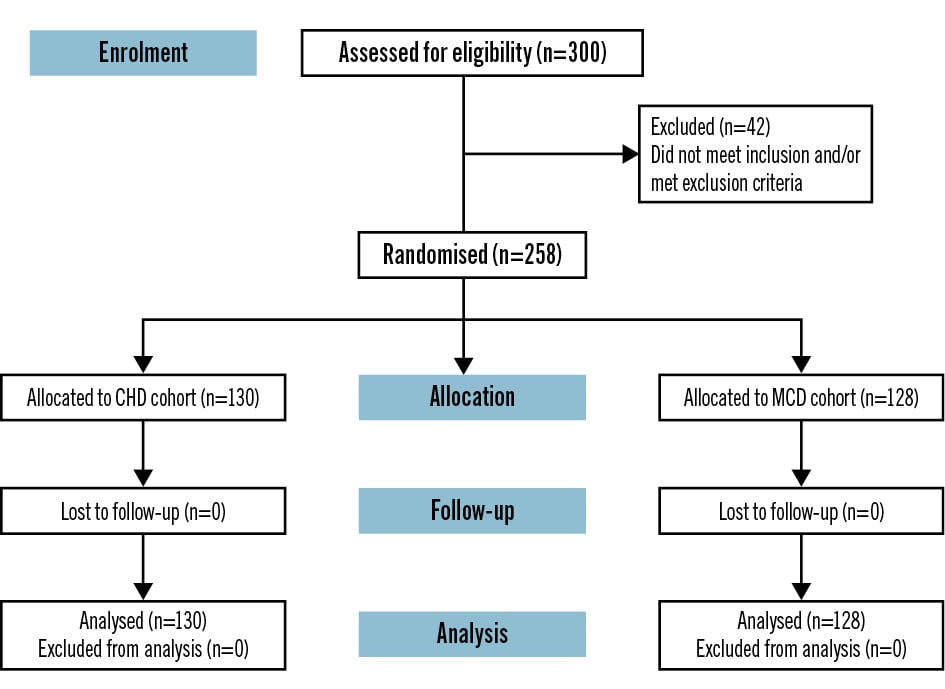
Figure 1. Study flow diagram. Flow of study participants through eligibility assessment, randomisation, allocation, follow-up, and analysis. CHD: chitosan haemostatic dressing; MCD: manual compression device
Standard transradial procedure prior to haemostasis
The transradial approach was used for all patients in this study who underwent cardiac procedures. For all cardiac procedures, an established protocol for TRA was applied, according to which the access site was anaesthetised with lidocaine. Radial arterial access was obtained using a 6 Fr radial sheath (Radifocus Introducer II [Terumo]). To prevent vasospasm and thromboembolic events, a preprepared mixture of nitroglycerine (100 mg), verapamil (5 mg), and xylocaine (100 mg), along with 100 units/kg of heparin, was injected into the radial artery sheath. Additional heparin was administered during PCI if needed, to achieve an activated clotting time (ACT) of 250-300 seconds. The ACT was measured via the arterial introducer sheath in all patients at the end of the procedure, before the application of a haemostatic device.
Application of a haemostatic device
At the end of the transradial coronary procedure, patients were assigned randomly to the CHD cohort or the MCD cohort.
In the CHD cohort, the radial pad was positioned over the sheath entry point after removal. A cotton gauze was placed over the pad, and the sheath was withdrawn while allowing a small amount of blood to soak the underside of the pad to initiate the chitosan-blood reaction. Manual pressure was applied for 2 minutes. Pressure was then released to assess for ongoing bleeding. If bleeding continued, compression was reapplied for 1 additional minute and the site was reassessed; this process was repeated until no visible bleeding remained. The time to initial haemostasis was recorded. An elastic bandage was wrapped around the CHD pad and gauze assembly and left in place for 30 minutes. After 30 minutes, the elastic bandage was loosened. If any bleeding was observed, manual compression was reapplied, and the access site was monitored every 2 minutes until complete haemostasis was confirmed.
In the MCD cohort, immediately after the procedure, the radial artery sheath was removed. Haemostasis was achieved by applying the MCD as per the standard protocol. Thirty minutes after sheath removal, the MCD was progressively deflated by removing 2 mL of air. If bleeding was observed, 2 mL of air was reinjected, and the process was repeated at 30, 60, 80, 100, 120, 160, and 180 minutes until no further bleeding was observed. After successful haemostasis, the MCD was removed, and an elastic bandage was loosely applied over a cotton gauze at the access site, which had to be removed before discharge.
Postoperative access site outcomes
Clinical parameters including time to haemostasis, presence of haematomas, and rebleeding at the access site were recorded and evaluated from device placement to 1 hour after device removal, with a 24-hour post-procedure follow-up. Radial artery patency and pain/discomfort were evaluated 1 hour after device removal by the reverse Barbeau test. If the reverse Barbeau test was abnormal, Doppler ultrasound was performed within 24 hours.
For the CHD cohort, haemostasis time was defined as the duration from sheath removal to the complete cessation of visible bleeding or oozing at the puncture site, as assessed by immediate visual inspection following manual compression using the chitosan-based dressing. Haemostasis was considered achieved when no further bleeding was noted post-application. Additional assessments were conducted at 30 minutes post-haemostasis to monitor for any delayed bleeding, haematoma formation, or related complications.
For the MCD cohort, haemostasis was evaluated through a standardised pneumatic compression protocol, with bleeding assessed at fixed intervals of 30, 60, 80, 100, 120, 160, and 180 minutes. Haemostasis time was defined as the timepoint at which no bleeding was observed during these scheduled checks in accordance with the device’s pressure release protocol.
Statistical analysis
Statistical analysis was performed using SPSS Statistics, version 26.0 (IBM). The Kolmogorov-Smirnov test was used to assess data normality. Continuous variables are summarised using mean±standard deviation and were compared between CHD and MCD groups using the independent samples t-test. Descriptive statistics are used to summarise sheath size and haematoma grade distribution. Categorical variables are expressed as frequencies and percentages and were compared using the chi-square (χ²) test or Fisher’s exact test where appropriate.
A p-value<0.05 was considered statistically significant for all comparisons. Descriptive statistics were used to summarise sheath size and haematoma grade distribution.
Ethical considerations
The study was conducted in accordance with ISO 14155:2011, the International Council for Harmonisation of Technical Requirements for Registration of Pharmaceuticals for Human Use Good Clinical Practice guideline, and regulatory requirements. The study protocol (AX/PRT/19-01) was approved by the ethics committee of Sanjay Gandhi PGIMS, Lucknow, India. Before collecting any personal information, the researchers obtained consent from all patients. Personal information was accessible only to approved researchers and others with legal authorisation. If the research findings were to be released, only the summary conclusions would be offered, with no participant identities revealed
The study was conducted in a way that ensured the confidentiality of the participants’ data. Only the researchers involved in the study had access to the data, and the principal investigator retained the original data forms. Participants were free to decline participation without facing any negative consequences, and all patients who met the eligibility criteria were considered eligible to participate, regardless of sex. All participants received the complete treatment plan as needed.
Results
A total of 258 patients were enrolled in the study and randomly assigned to two cohorts: 130 to the CHD group and 128 to the MCD group. There were no early withdrawals, deaths, or losses to follow-up during hospitalisation. There were no differences in the baseline demographics or clinical characteristics of the participants (Table 1). Hypertension and diabetes mellitus were common comorbidities in both groups. Tobacco use was reported in ~30% of participants. The groups were comparable across all preoperative variables.
Table 2 shows the procedural outcomes of the study patients. The heparin doses used in both groups indicated broadly comparable anticoagulation regimens. No intraoperative complications or deviations from standard procedural practices were reported in either group.
The clinical efficacy of each haemostatic method was measured through parameters like haemostasis time, haematoma occurrence, pain score, rebleeding events, and radial artery occlusion (Table 3). The CHD demonstrated a significantly shorter haemostasis time (5.84±2.19 min) than the MCD (120.2±21.88 min), with a highly significant p-value (<0.001), showcasing the superior haemostatic property of the CHD (Figure 2). The mean post-application pain scores were low in both groups, suggesting a comparable and well-tolerated experience for patients (Table 3).
The CHD showed decreased haematoma and rebleeding incidence, compared with the MCD, along with its low compression time (Figure 3). RAO, a known risk of prolonged compression, occurred in 3.12% of MCD patients, while no RAO events were reported in the CHD group, with a significant p-value (<0.05) (Figure 4). These differences could lead to shorter hospital stays and earlier discharge, thereby lowering expenditure on patients receiving the CHD and showcasing the increased need for more effective haemostatic devices such as the CHD, especially during transradial coronary procedures. Side effects and adverse events with the use of both haemostatic devices were evaluated, and no serious adverse events (SAEs), allergic reactions, or device-related complications were observed in either group.
Table 1. Baseline demographics and clinical characteristics of the participants.
| Characteristic | CHD (n=130) | MCD (n=128) |
|---|---|---|
| Age, years | 57.47±11.14 | 59.03±12.39 |
| Male sex | 100 (76.9) | 97 (75.8) |
| Female sex | 30 (23.1) | 31 (24.2) |
| Hypertension | 47 (36.2) | 52 (40.6) |
| Diabetes mellitus | 50 (38.5) | 57 (44.5) |
| Dyslipidaemia | 42 (32.3) | 38 (29.7) |
| Tobacco use | 56 (43.1) | 50 (39.1) |
| Data are presented as mean±SD or n (%). CHD: chitosan haemostatic dressing; MCD: manual compression device; SD: standard deviation | ||
Table 2. Procedural characteristics of study patients.
| Characteristic | CHD (n=130) | MCD (n=128) |
|---|---|---|
| >1 puncture attempts | 19 (14.6) | 16 (12.5) |
| Mean heparin dose, IU | 6,823.08±456.91 | 6,687.5±528.7 |
| Post-procedure ACT, s | 294.5±70.30 | 302.81±71.26 |
| Data are presented as mean±SD or n (%). ACT: activated clotting time; CHD: chitosan haemostatic dressing; IU: international units; MCD: manual compression device; SD: standard deviation | ||
Table 3. Haemostasis outcomes.
| Characteristic | CHD (n=130) | MCD (n=128) |
|---|---|---|
| Haemostasis time, min | 5.84±2.19*** | 120.2±21.88 |
| Rebleeding | 1 (0.77) | 3 (2.34) |
| Haematoma | 5 (3.9) | 4 (3.2) |
| Grade 0 | 125 (96.2) | 124 (96.9) |
| Grade I | 4 (3.1) | 2 (1.6) |
| Grade II | 1 (0.8) | 2 (1.6) |
| Post-application pain scores | 0.15±0.70 | 0.29±1.03 |
| Pain | 9 (6.9) | 11 (8.6) |
| Radial artery occlusion | 0 (0)* | 4 (3.12) |
| Data are presented as mean±SD or n (%). *p<0.05; ***p<0.001. CHD: chitosan haemostatic dressing; MCD: manual compression device; SD: standard deviation | ||
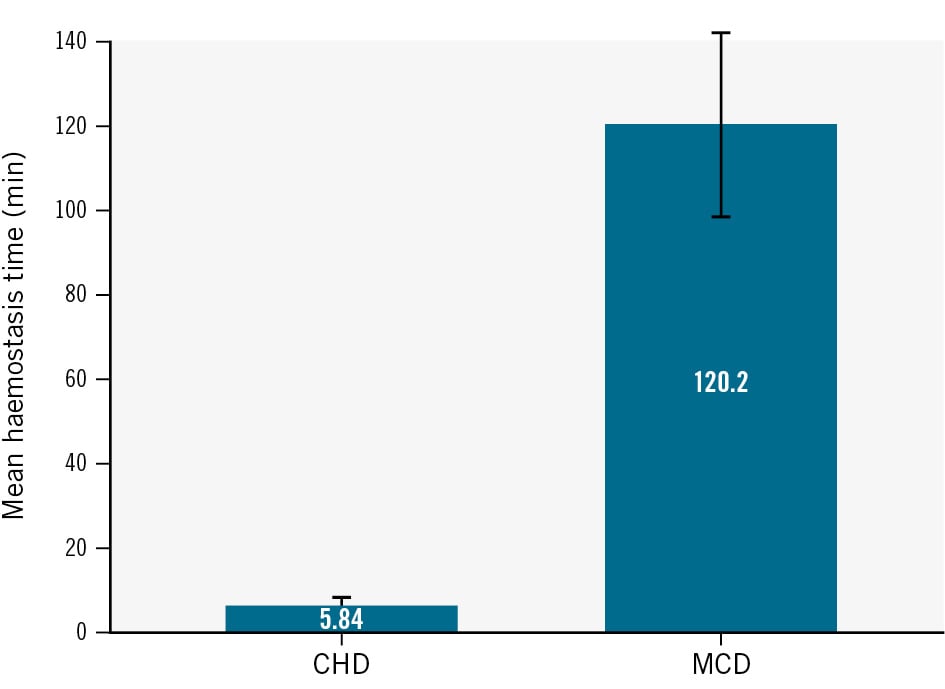
Figure 2. Mean haemostasis time in the CHD and MCD groups. Comparison of the mean haemostasis time following transradial coronary intervention in patients treated with the CHD or the MCD. CHD: chitosan haemostatic dressing; MCD: manual compression device
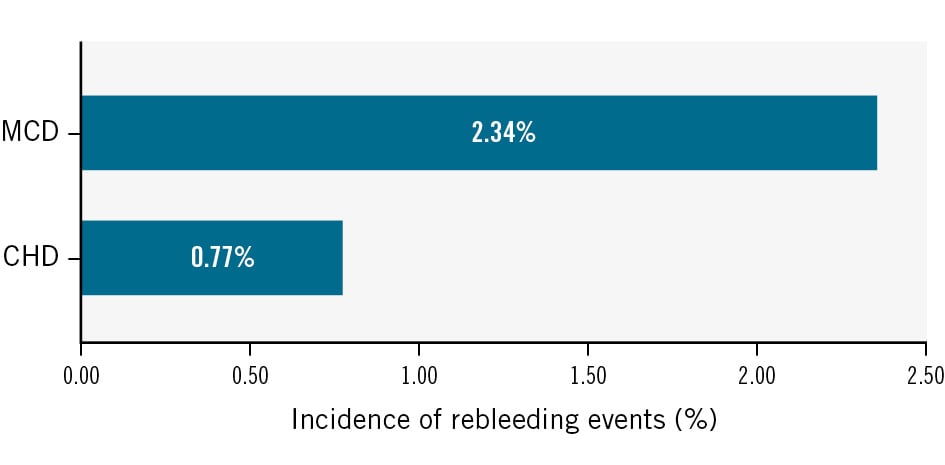
Figure 3. Rebleeding events in the CHD and MCD groups. Comparison of rebleeding events following achievement of haemostasis in patients treated with the CHD or the MCD. CHD: chitosan haemostatic dressing; MCD: manual compression device
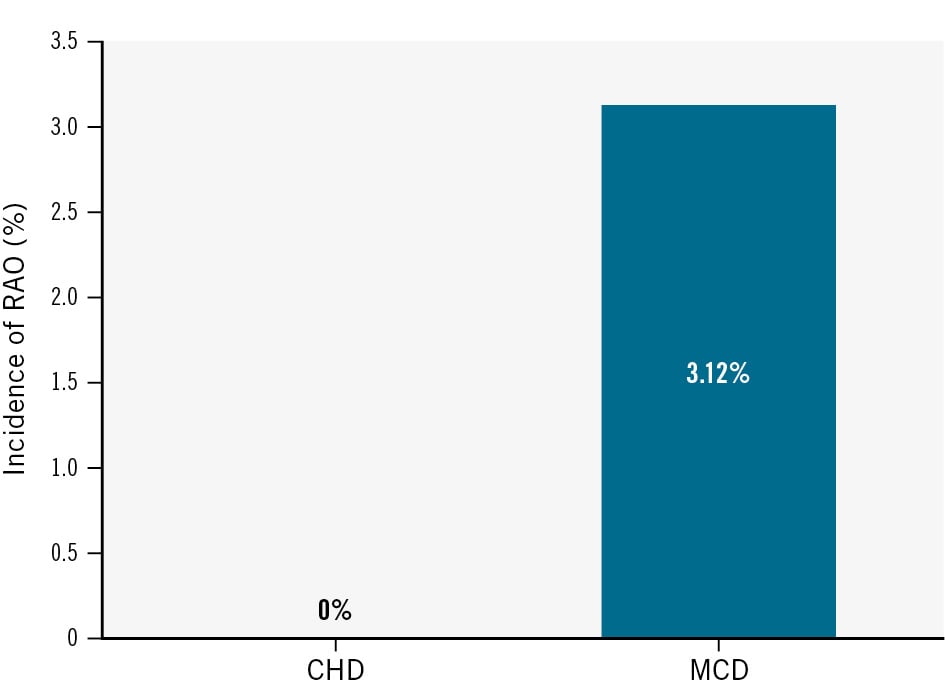
Figure 4. Radial artery occlusion in the CHD and MCD groups. Incidence of radial artery occlusion following transradial coronary intervention in patients treated with the CHD or the MCD. CHD: chitosan haemostatic dressing; MCD: manual compression device; RAO: radial artery occlusion
Discussion
Globally accepted standard guidelines for achieving haemostasis following transradial coronary procedures, including the use of conventional MCDs, have been associated with escalating complications, increased patient discomfort, and prolonged hospital stays, contributing to higher healthcare costs and increased resource utilisation.611 However, these issues have been disregarded in routine practice. Several studies have demonstrated that an extended compression time not only increases the risk of RAO but may also predispose patients to rebleeding, haematoma formation, and delayed ambulation, even after discharge.171819 These studies highlight the need for haemostatic strategies that reduce compression time while maintaining safety and preserving radial artery patency. One such promising alternative has evolved in recent years in the form of chitosan haemostatic dressings.
The purpose of this prospective randomised study was to assess the haemostatic efficacy of two haemostatic devices: an MCD and a CHD. The results demonstrate that the CHD offers several advantages over the MCD in terms of faster haemostasis with comparable safety outcomes, supporting its usage in routine practice.
The primary endpoint, time to haemostasis, was significantly lower in the CHD group (5.84±2.19 minutes) compared with the MCD group (120.2±21.88 minutes), with a highly significant p-value (<0.001), demonstrating CHD’s superior haemostatic property. The shorter haemostasis time with the CHD makes it ideal for achieving more rapid bleeding control and potentially enabling earlier patient ambulation and discharge. Our findings on haemostasis time are in line with previous study results, indicating that the MCD requires more compression time to achieve haemostasis than other methods of radial compression.20212223
The difference in haemostasis time is most likely attributable to the different methods of exerting pressure on the radial artery. Because the MCD is a self-deflating device, the pressure within the inflated bladder drops with time. This is most likely due to wrist motions, which may result in bladder deflation. The CHD, on the other hand, forms a mechanical seal within minutes of compression, after which it is eased by the operator, contributing to the achievement of quicker haemostasis.672425
In addition to its mechanical effect, the CHD promotes platelet activation and supports activation of the coagulation cascade, stabilising the clot and minimising bleeding complications. CHDs are particularly advantageous during TRCI procedures, where anticoagulant use may delay haemostasis. Chitosan binds to TLR-2 and activates platelets, facilitating effective haemostasis even in anticoagulated patients.14 Shorter compression times, along with the CHD’s superior haemostatic mechanism, provide several advantages over MCDs, including reduced patient discomfort caused by prolonged wrist compression, lower risk of RAO, earlier patient discharge, and potentially reduced healthcare cost.
The secondary performance endpoints, such as pain, rebleeding, haematoma formation, and RAO, observed for both groups, showed comparable results. Post-application pain scores were low and comparable between both groups (CHD: 0.15±0.70 vs MCD: 0.29±1.03; p=0.7880). Several studies have reported increased discomfort associated with prolonged pneumatic compression using the MCD, particularly when extended compression protocols are employed.2627 However, in the present study, the overall pain burden remained minimal in both groups, suggesting acceptable patient comfort with either approach.
In the CHD group, lower incidences of rebleeding and haematoma were reported compared with the MCD group. The CHD group had a lower rebleeding incidence of 0.77%, compared with 2.34% in the MCD group, despite the CHD’s shorter compression time, although this difference was not statistically significant (p=0.6034). While overall haematoma rates were similar between both groups (3.9% for CHD vs 3.2% for MCD), the CHD group showed a lower rate of grade II haematomas, suggesting a better bleeding profile. RAO, a known risk of prolonged compression, occurred in 3.12% of MCD patients, while no RAOs were reported in the CHD group. The difference was statistically significant (p<0.05) and aligned with the hypothesis that the shorter compression times associated with the CHD may reduce the risk of arterial injury and occlusion. In this study, no SAEs, allergic reactions, or device-related complications were reported in either group, further supporting the biocompatibility and safety of the CHD in routine clinical practice.
Evidence in the literature from multiple clinical investigations, including studies conducted by Lee et al,14 Minici et al,13 and Perri et al,12 demonstrates that Axiostat achieves reliable haemostasis after vascular access procedures while maintaining arterial patency, with very minimal cases of radial artery occlusion and no major vascular complications. The findings of the present study, together with comparable literature reports, further indicate that the use of a 100% chitosan-based haemostatic dressing like Axiostat can provide effective haemostasis and reduced incidence of radial artery occlusion. However, variability across published outcomes suggests that factors such as study design, procedural protocols, additional adjunctive device use, and application technique can influence study results. For instance, an investigation by Nakache et al,28 involving a relatively small patient cohort, assessed Axiostat in conjunction with a compression band and reported a comparatively higher rate of radial artery occlusion. Notably, in that study, the haemostatic dressing was applied alongside an adjunctive compression device, in contrast to its standalone use in the present study.
Collectively, these findings highlight that, beyond the intrinsic haemostatic properties of haemostatic dressings, the method of application plays a critical role in determining clinical outcomes and complication rates. To date, when used independently, chitosan-based haemostatic dressings including Axiostat appear to provide an effective and safe alternative to conventional manual compression approaches, enabling rapid haemostasis, shorter compression duration, absence of observed radial artery occlusion, lower patient-reported discomfort, and minimal postprocedural complications following transradial coronary interventions.
Limitations
This study had limitations due to its single-centre and open-label design which gives rise to the possibility of bias in outcome assessment, as the operator, research coordinator, and patients were aware of the different haemostatic devices utilised. Formal clinical follow-up ended at hospital discharge or 24 hours after intervention, and although none were reported, we cannot exclude the occurrence of late complications including delayed RAO. Future studies may include long-term patient follow-up to gain a better understanding of the intervention’s effects.
Conclusions
The study findings support the conclusion that the CHD is a safer and more effective alternative to MCDs for achieving haemostasis following TRCI. The CHD showed significantly reduced haemostasis time, lowered patient-reported pain, and had zero incidence of radial artery occlusion, with lower rebleeding and haematoma rates and excellent tolerability with no allergic events. Given its favourable safety and performance outcomes, the CHD may be considered a clinically advantageous option for postprocedural radial artery management. These findings are particularly relevant for high-throughput catheterisation labs aiming to reduce bed occupancy time and improve patient comfort.
Impact on daily practice
Chitosan haemostatic dressings (CHDs) provide a safer and more effective haemostatic alternative to conventional manual compression devices following transradial coronary interventions. By significantly reducing the compression time, CHDs lower the risk of radial artery occlusion, rebleeding, and haematoma formation. In turn, this reduces patient discomfort, enabling earlier discharge and lowering healthcare costs.
Conflict of interest statement
The authors have no conflicts of interest to declare.