Aortic regurgitation (AR) represents one of the most common valvular heart diseases, with moderate or greater disease found in 2.5-2.8% of adults; its prevalence and severity increase with advancing age.123 Unlike aortic stenosis (AS), which is characterised by leaflet calcification and restriction, pure AR results from either primary leaflet pathology (bicuspid valve, prolapse, endocarditis, rheumatic disease) or aortic root dilatation, which leads to incomplete coaptation and diastolic backflow into the left ventricle.45 Chronic volume overload leads to progressive left ventricular dilatation and dysfunction, with surgical aortic valve replacement remaining the definitive treatment for symptomatic severe disease or left ventricular decompensation.6
Transcatheter aortic valve implantation (TAVI) has transformed the management of AS across all surgical risk categories, yet its application in pure AR has progressed more cautiously. The absence of annular or leaflet calcification – which normally provides anchoring for transcatheter valves – combined with a dilatated aortic annulus and root creates challenges for device stability and positioning. Early TAVI experience in AR relied predominantly on transapical access to enable precise device deployment, though this approach carries higher morbidity than transfemoral delivery. Off-label use of devices designed for AS yielded variable results, with higher rates of device embolisation, permanent pacemaker implantation, paravalvular leak, and procedural failure than standard use in AS.789
Recognition of these anatomical and procedural challenges prompted the development of dedicated AR devices incorporating specific design features: enlarged anchoring skirts, repositionability, and mechanisms to engage the native leaflets or aortic root rather than relying solely on radial force against calcium. Early clinical series demonstrated technical feasibility,10 though limited patient numbers and heterogeneous access approaches (transapical, transfemoral, transaortic) precluded definitive conclusions regarding comparative effectiveness.
Contemporary TAVI practice has evolved markedly towards transfemoral access as the default approach, driven by the reduced morbidity, shorter recovery, and increasing operator experience.11 This evolution reflects broader technical advances including improved valve designs and refined imaging guidance. Recent meta-analyses have compared dedicated versus off-label devices in pure AR but included heterogeneous access cohorts or historical data from earlier device generations,12 limiting the applicability to current practice patterns. Whether dedicated devices confer meaningful clinical advantages over contemporary off-label devices when delivered via the transfemoral route, now the predominant access strategy, remains incompletely defined. We therefore conducted a systematic review and meta-analysis comparing dedicated versus off-label TAVI devices for pure native aortic regurgitation (PNAR), restricting analysis to transfemoral access and contemporary studies to inform current clinical decision-making.
Methods
Protocol and registration
This systematic review followed the Preferred Reporting Items for Systematic Reviews and Meta-Analyses (PRISMA) 2020 guidelines (https://www.prisma-statement.org/). The protocol was prospectively registered on the International Prospective Register of Systematic Reviews (PROSPERO: CRD420251135422).
Search strategy
We conducted systematic searches of PubMed (MEDLINE) and the Cochrane Central Register of Controlled Trials (CENTRAL) from 1 January 2020 to 2 November 2025. The search strategy incorporated terms for transcatheter aortic valve implantation, aortic regurgitation, and transfemoral access. We limited searches to English language publications. Reference lists of included studies and relevant systematic reviews were manually searched for additional eligible studies.
Given substantial device iterations and improvements in operator experience over time, we restricted our analysis to contemporary studies published from 2020 onwards. This approach captures current device generations and contemporary practice patterns whilst minimising heterogeneity from historical data with earlier-generation devices.
Eligibility criteria
We included studies of adults (≥18 years) with moderate-to-severe or severe PNAR undergoing transfemoral TAVI. Eligible devices included dedicated AR devices (JenaValve Trilogy [JenaValve], J-Valve [JC Medical], Hanchor Valve [Healing Medical]) and off-label devices designed for aortic stenosis (SAPIEN [Edwards Lifesciences], CoreValve/Evolut [Medtronic], ACURATE [Boston Scientific], Portico/Navitor [Abbott], Myval [Meril], and other commercially available transcatheter heart valves).
Studies were required to enrol patients with pure native aortic valve regurgitation without haemodynamically significant concurrent aortic stenosis. We accepted each study’s own definition of “pure” AR, which typically required the absence of moderate or greater aortic stenosis on echocardiography.
Studies were excluded if they (1) included predominantly non-transfemoral access (≥90% transfemoral required), (2) enrolled patients with aortic stenosis, (3) reported prosthetic valve regurgitation or valve-in-valve procedures, (4) included fewer than 10 patients, (5) lacked extractable outcome data, or (6) were published before 2020.
Study selection and data extraction
Two reviewers independently screened titles and abstracts, followed by full-text review. Data extraction was performed using a standardised form. Extracted data included study characteristics, patient demographics, clinical characteristics, procedural details, and outcomes. Disagreements were resolved through discussion.
Outcomes
The primary outcome was 30-day (or in-hospital) all-cause mortality. Secondary outcomes included device success, residual AR ≥moderate, valve embolisation or migration, permanent pacemaker implantation (PPI), reintervention, stroke, major bleeding, and acute kidney injury (stage 2-3).
Device success and major bleeding were assessed according to Valve Academic Research Consortium (VARC)-2 or VARC-3 criteria as reported by each study (Table 1). To assess the impact of definition heterogeneity, sensitivity analyses were performed, restricting device success to cohorts reporting VARC-3 criteria only.
Table 1. Characteristics of included studies.
| Study | Country | N | Device category | Specific device(s) | TF, % | FU, days | Age, years | Female, % | STS-PROM score, % | NYHA III/IV, % | LVEF, % | Annulus diameter, mm | VARC |
|---|---|---|---|---|---|---|---|---|---|---|---|---|---|
| Pan 202516 | China | 128 | Dedicated | Hanchor Valvea | 100 | 30 | 74.0 | 23.4 | 4.8 | 84.4 | 54.0 | 26.4 | Custom |
| Wienemann 202518 | Multiple (Germany+UK) | 141 | Dedicated | JenaValve Trilogyb | 100 | 30 | 81.0±4.4 | 41.0 | ES-II 3.6 | 70.2 | NR | 26.7 | NR |
| Poletti 2024† 13 | Multicentre | 256 | Both | JenaValve Trilogyb; SAPIENc, Evolutd, ACURATEe, Porticof | 100 | 364 | 80.0 | 44.5 | 3.1 | 76.2 | 47.4 | 25.4 | VARC-3 |
| Vahl 202417 | USA | 180 | Dedicated | JenaValve Trilogyb | 100 | 365 | 75.5±10.8 | 47.2 | 4.1±3.4 | 67.8 | 53.8±11.4 | 24.8 | VARC-2 |
| Ju 202529 | China | 69 | Off-label | VitaFlow Libertyg | 100 | 180 | 73.6±7.7 | 40.6 | 4.0 | NR | 56.1±11.6 | NR | NR |
| Poletti 202533 | Multiple (Europe+USA) | 144 | Off-label | Myvalh; SAPIEN 3/Ultrac | 99.3 | 365 | 79.7 | 33.3 | 2.7 | 69.4 | 40.0 | 28.3 | VARC-3 |
| Xia 202534 | China | 121 | Off-label | TaurusElitei | 100 | 30 | 72.7±8.0 | 45.5 | 4.6±3.8 | 67.7 | 53.4±11.8 | 24.5±2.0 | VARC-3 |
| Yang 202535 | China | 87 | Off-label | VitaFlowg; VenusA-Valvej | 100 | 30 | 72.1±8.5 | 52.9 | 3.3±2.1 | 43.7 | 55.7±11.6 | 25.6±2.0 | VARC-3 |
| Yu 202537 | China | 100 | Off-label | VitaFlowg | 98.4 | 365 | 72.7±7.2 | 37.0 | 9.1±5.8 | 64.0 | 53.0±10.7 | 25.6±1.7 | VARC-3 |
| Hu 202420 | China | 70 | Off-label | VitaFlowg; VenusA-Valvej | 100 | 30 | 73.7±7.6 | 44.3 | 4.1±3.4 | 72.9 | 49.9 | 24.4 | VARC-2 |
| Kong 202422 | China | 62 | Off-label | VitaFlowg | 100 | 365 | 71.6±7.3 | 41.9 | 5.4±3.2 | 61.3 | 54.0±10.8 | 25.0±2.2 | VARC-3 |
| Le Ruz 202423 | France | 227 | Off-label | Evolut R/PROd; SAPIEN 3c | 91.6 | 480 | 81.0 | 35.7 | ES-II 6.0 | 77.3 | 46.0 | 26.0 | VARC-3 |
| Lin 202424 | China | 75 | Off-label | VenusA-Valvej; VitaFlowg | 100 | 30 | 74.7 | 38.7 | 4.2 | 72.0 | 48.5 | 25.8 | VARC-3 |
| Orzalkiewicz 202426 | Italy | 13 | Off-label | SAPIEN 3c | 100 | 300 | 80.8±5.6 | 30.8 | 4.0±1.7 | NR | 44.8±12.0 | 26.1 | VARC-3 |
| Yu 202436 | China | 30 | Off-label | VenusA-Valvej | 100 | NR | 70.4±8.4 | 26.7 | NR | 53.3 | 53.2±14.4 | 25.8±2.6 | NR |
| Zhang 202430 | China | 68 | Off-label | VitaFlow Libertyg | 100 | 30 | 74.5±8.2 | 48.5 | 7.9±1.5 | NR | 52.9±9.6 | 24.5±2.5 | VARC-3 |
| Chen 202332 | China | 37 | Off-label | VitaFlowg; VenusA-Valvej | 97.3 | 365 | 73.1±8.7 | 37.8 | 8.6±2.1 | 45.9 | 53.1±12.1 | 26.0±2.2 | NR |
| Koch 202321 | United States | 34 | Off-label | SAPIEN 3c; Evolutd | 100 | 30 | 68.0±12.2 | 26.5 | 4.0 | 88.2 | 50.2±13.7 | 26.3±2.3 | VARC-3 |
| Oettinger 202325 | Germany | 786 | Off-label | NR | 100 | 30 | 76.8±8.7 | 34.2 | NR | 54.6 | NR | NR | NR |
| Sanchez-Luna 202327 | Multiple (Europe+USA+ Asia-Pacific region) |
113 | Off-label | Myvalh | 100 | 365 | 78.4±7.5 | 35.4 | 2.7±1.7 | 62.8 | 43.4±14.7 | 28.2±2.6 | VARC-3 |
| Zheng 202338 | China | 45 | Off-label | VenusA-Valvej | 100 | 365 | 73.5±5.5 | 26.7 | NR | 95.6 | 41.5±4.6 | NR | VARC-2 |
| Chen 202219 | China | 32 | Off-label | VenusA-Valvej; VitaFlowg | 100 | 30 | 71.9±8.0 | 22.1 | 8.6±1.7 | 71.9 | 48.1±9.5 | 26.4±2.0 | VARC-3 |
| Chen 2022 (CT indexes)31 | China | 77 | Off-label | VenusA-Valvej; VitaFlowg | 100 | NR | 78.1±12.5 | 52.0 | 7.7±5.9 | 68.0 | 43.9±13.9 | 25.8±2.7 | VARC-2 |
| Wang 202228 | China | 61 | Off-label | VenusA-Valve/VenusA-Plusj | 98.4 | 30 | 72.8±6.7 | 37.7 | 5.8±1.8 | 82.0 | 54.3±12.4 | 24.6±2.2 | VARC-3 |
| Data are n, %, or mean±standard deviation. †Poletti 2024 {13} reported data for both dedicated and off-label device cohorts and was treated as two separate cohorts in the analysis. aBy Healing Medical; bby JenaValve; cby Edwards Lifesciences; dby Medtronic; eby Boston Scientific; fby Abbott; gby MicroPort; hby Meril; iby Peijia Medical; jby Venus Medtech; ES-II: European System for Cardiac Operative Risk Evaluation II; FU: follow-up; LVEF: left ventricular ejection fraction; N: number of patients; NR: not reported; NYHA: New York Heart Association; STS-PROM: Society of Thoracic Surgeons Predicted Risk of Mortality; TF: transfemoral access; VARC: Valve Academic Research Consortium | |||||||||||||
Quality assessment
Two reviewers independently assessed the risk of bias using the Newcastle-Ottawa scale (NOS) for non-randomised cohort studies. Individual scores are reported in Supplementary Table 1.
Statistical analysis
Meta-analyses were performed using R, version 4.3.1 (R Foundation for Statistical Computing) with the meta and metafor packages. Event rates were pooled using random-effects models with restricted maximum likelihood (REML) estimation and logit transformation with 0.5 continuity correction. Heterogeneity was quantified using Cochran’s Q, I2, and τ2. Subgroup differences were assessed using the Q test for subgroup differences.
Subgroup analyses and meta-regression
The primary subgroup comparison evaluated outcomes between dedicated AR devices and off-label devices. This represented an indirect comparison of predominantly single-arm studies. One study (Poletti et al, 202413) reporting data for both device types was treated as two separate cohorts.
Odds ratios (OR) with 95% confidence intervals (CI) were calculated for each outcome using mixed-effects meta-regression with the device category (dedicated vs off-label) as the moderator variable and REML estimation. Risk ratios (RR) with 95% CI were computed from pooled event rates per group.
Univariable meta-regression examined associations between 30-day mortality and mean age, Society of Thoracic Surgeons (STS) score, left ventricular ejection fraction, aortic annulus diameter, year of publication, and valve oversizing percentage using mixed-effects models with REML estimation.
Sensitivity analyses
Prespecified sensitivity analyses assessed robustness by excluding studies with <20 patients, restricting analyses to cohorts with 100% transfemoral access, and limiting the publication year to 2022 or later.
Publication bias
Publication bias was evaluated for outcomes with ≥10 studies using funnel plots and Egger’s regression test.
Results
Study selection and characteristics
The search identified 994 records after duplicate removal (Figure 1). Following title, abstract, and full-text review, 24 contemporary studies (2020-2025) met the eligibility criteria, contributing 25 cohorts. Fifty-seven studies were excluded for wrong study design (n=26), wrong patient population (n=10), incorrect route of administration (n=15), or other reasons (n=7).
The 24 studies enrolled 2,956 patients (median per study: 77 [interquartile range [IQR] 61-128]) encompassing 25 cohorts, due to one study reporting data for both dedicated and off-label devices. Sixteen were retrospective cohorts, seven were prospective, and two were both. Four cohorts (537 patients, 18.2%) evaluated dedicated devices: JenaValve Trilogy (n=409) and Hanchor Valve (n=128). Twenty-one cohorts (2,419 patients, 81.8%) assessed off-label devices: self-expanding (14 cohorts), balloon-expandable (3 cohorts), and mixed (4 cohorts).
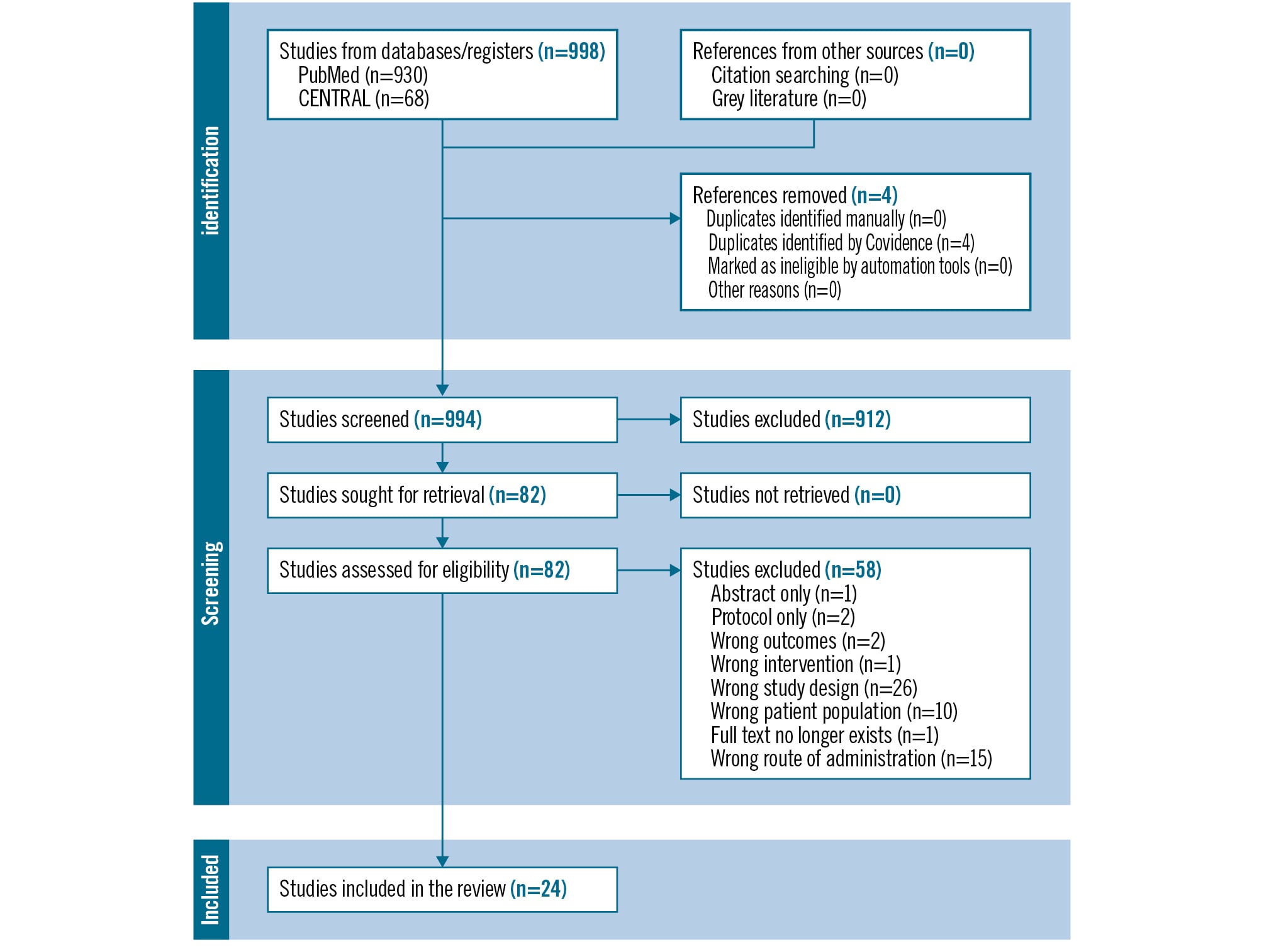
Figure 1. PRISMA 2020 flow diagram for study selection. Studies were excluded for wrong access route (non-transfemoral), wrong patient population (aortic stenosis or prosthetic valve), or insufficient patient numbers (<10). One study (Poletti 202413) contributed two separate cohorts (dedicated and off-label devices).
Patient and procedural characteristics
Patient characteristics are summarised in Table 1. The mean age was 75.2±3.7 years (range 68.0-81.0), 37.9% were female, and the mean left ventricular ejection fraction (LVEF) was 49.8±4.8%. The mean STS score was 5.1±2.1%, indicating predominantly intermediate surgical risk. Ten studies enrolled high-risk patients, whilst the remainder enrolled intermediate- to low-risk populations. The mean aortic annulus diameter was 25.8±1.1 mm. All cohorts included only pure AR patients.
Transfemoral access was 100% in 20 cohorts and ≥90% in 5 cohorts. General anaesthesia was used in 12 cohorts, with mixed approaches in 8 cohorts. The mean valve size was 29.1±0.8 mm.
Quality assessment
Using the Newcastle-Ottawa scale, 21 cohorts (84.0%) were rated as good quality (NOS ≥7) and 4 (16.0%) as fair (NOS 5-6); none were rated as poor (Supplementary Table 1). The median NOS score was 7 (IQR 7-8). All four dedicated device cohorts were rated as good quality.
Primary outcome: 30-day mortality
Thirty-day mortality data were available from 19 cohorts (2,554 patients, 83 deaths). Overall pooled mortality was 3.3% (95% CI: 2.3-4.8%, I2=45.7%; p=0.016). Dedicated devices achieved lower mortality (1.9%, 95% CI: 1.0-3.6%; 4 cohorts, 537 patients) than off-label devices (4.1%, 95% CI: 2.8-5.9%; 15 cohorts, 2,017 patients; OR 0.45, 95% CI: 0.20-1.00; p=0.051; RR 0.40, 95% CI: 0.19-0.83) (Figure 2). Heterogeneity was absent in the dedicated subgroup (I²=0%) and moderate in the off-label subgroup (I²=42.8%).
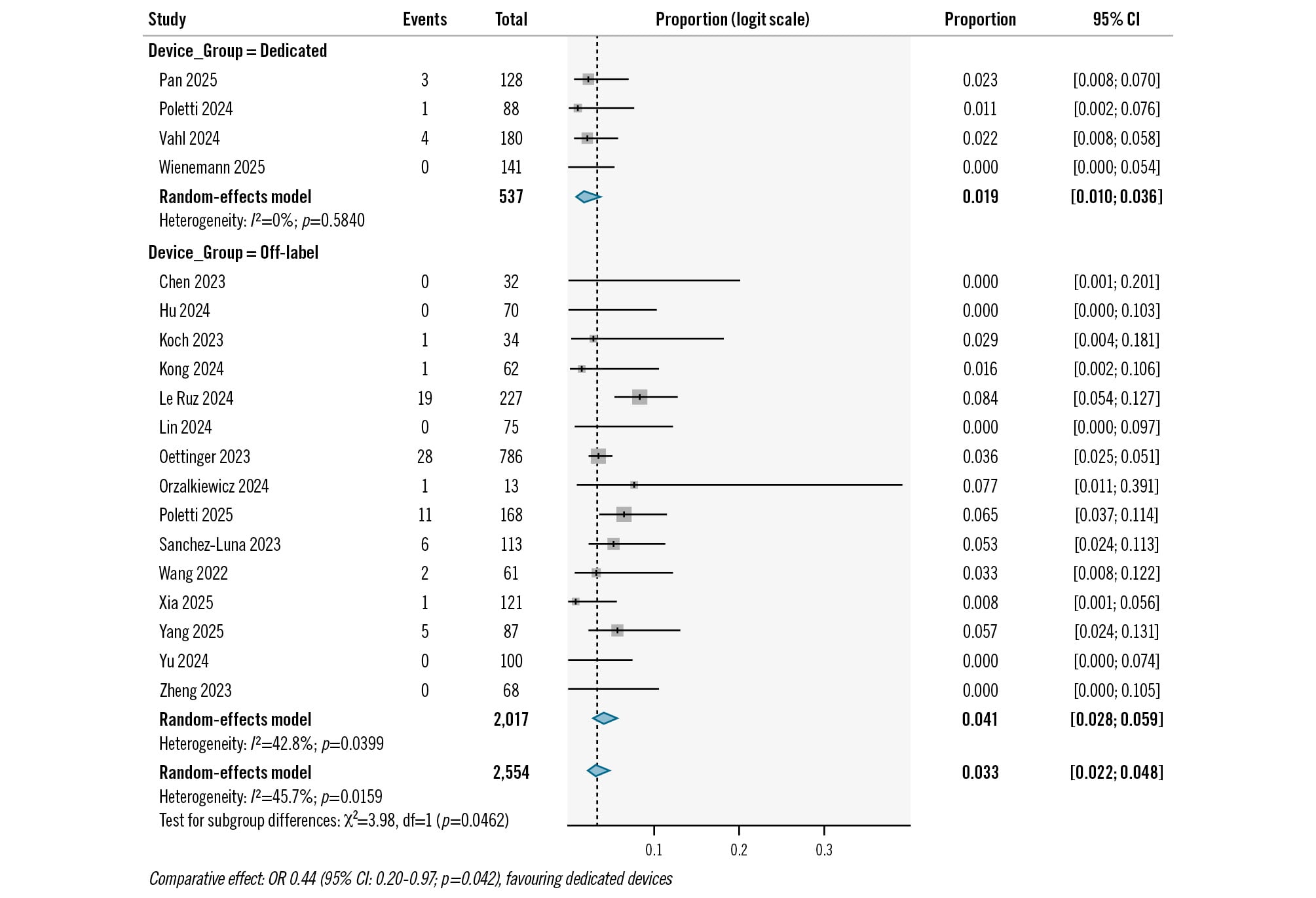
Figure 2. Forest plot showing pooled 30-day all-cause mortality for dedicated AR devices and off-label devices. Pooling used random-effects models with REML estimation and logit transformation. The diamonds represent the pooled estimates. The study references are listed in Table 1. AR: aortic regurgitation; CI: confidence interval; I²: heterogeneity statistic; OR: odds ratio; REML: restricted maximum likelihood
Secondary outcomes
Device success (19 cohorts, 1,635 patients) was 87.7% overall (95% CI: 83.0-91.2%). Dedicated devices achieved higher success (95.8%, 95% CI: 92.2-97.8%) than off-label devices (85.7%, 95% CI: 81.0-89.4%; OR 3.64, 95% CI: 1.33-9.95; p=0.012).
Residual AR ≥moderate (16 cohorts, 1,540 patients) occurred in 3.7% overall (95% CI: 1.7-7.9%), with markedly lower rates for dedicated devices (0.6%, 95% CI: 0.2-1.9%) than for off-label devices (6.2%, 95% CI: 2.9-12.6%; OR 0.11, 95% CI: 0.02-0.52; p=0.006).
Valve embolisation or migration (20 cohorts, 1,811 patients) occurred in 5.8% overall (95% CI: 3.4-9.9%), with lower rates for dedicated devices (2.1%, 95% CI: 1.1-4.1%) than for off-label devices (7.3%, 95% CI: 4.1-12.4%; OR 0.26, 95% CI: 0.07-0.99; p=0.048).
Permanent pacemaker implantation (23 cohorts, 1,998 patients) was required in 20.8% (95% CI: 17.5-24.6%), with no difference between groups (OR 0.99, 95% CI: 0.58-1.69; p=0.963). Stroke (15 cohorts, 1,975 patients) occurred in 2.6% (95% CI: 2.0-3.5%; OR 0.59, 95% CI: 0.25-1.38; p=0.223), and major bleeding (16 cohorts, 2,176 patients) in 3.0% (95% CI: 1.9-4.9%; OR 0.80, 95% CI: 0.27-2.41; p=0.692), with no device-related differences. Reintervention (15 cohorts, 1,616 patients) was required in 5.1% (95% CI: 2.6-9.7%), with lower rates for dedicated devices (2.0%) than for off-label devices (7.9%; OR 0.22, 95% CI: 0.07-0.69; p=0.010). Conversion to surgery (20 cohorts, 3,039 patients) occurred in 1.6% (95% CI: 1.0-2.5%), with a trend favouring dedicated devices (OR 0.41, 95% CI: 0.14-1.22; p=0.108). Acute kidney injury stage 2-3 (10 cohorts, 947 patients) occurred in 2.2% (95% CI: 1.2-4.0%), with no difference between groups (OR 0.48, 95% CI: 0.14-1.60; p=0.229).
Forest plots for outcomes with significant subgroup differences are presented in Figure 3–Figure 4–Figure 5–Figure 6, with those not reaching significance reported in Supplementary Figure 1. Comparative odds ratios for all outcomes are summarised in Figure 7.
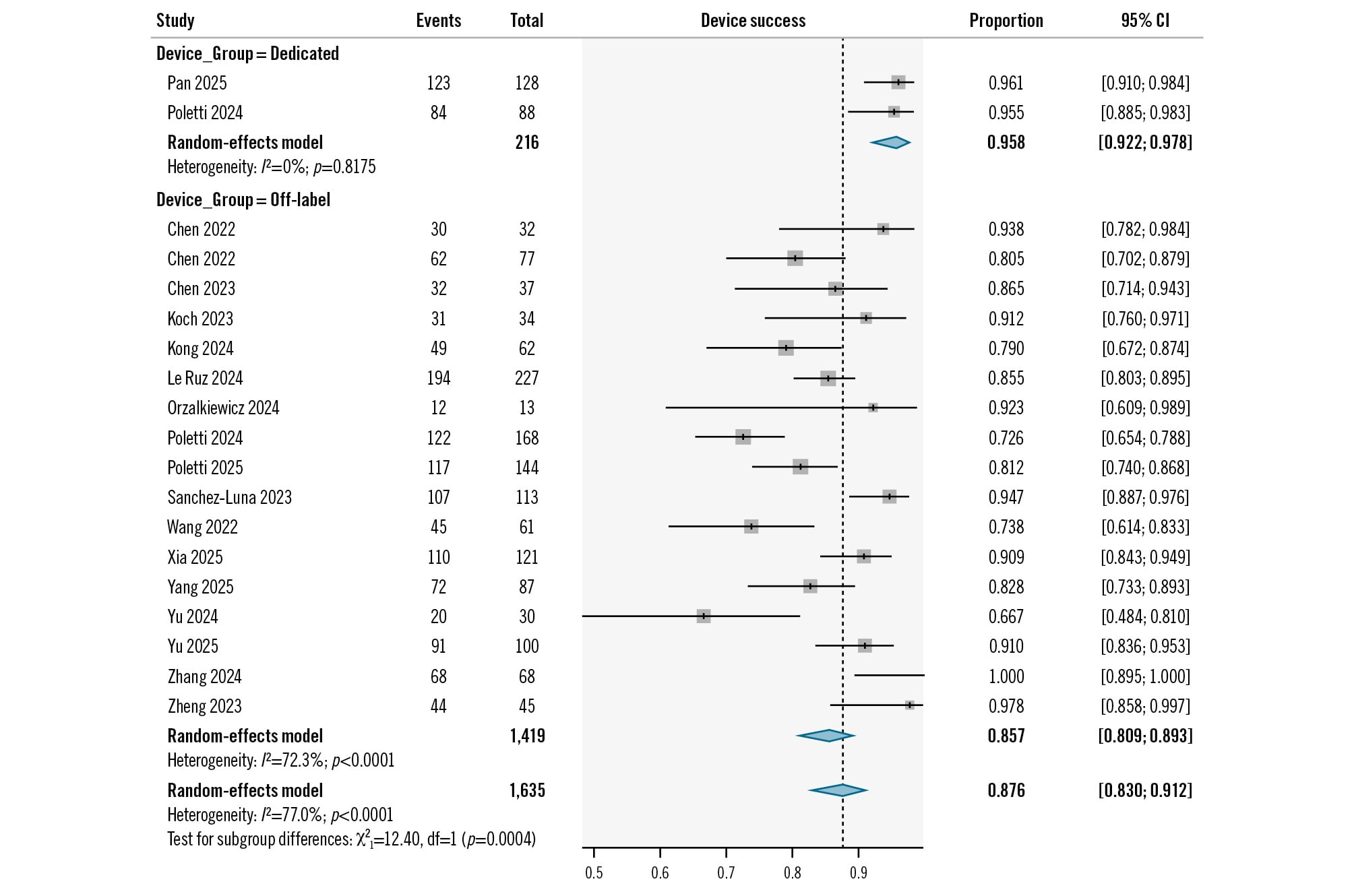
Figure 3. Forest plot of pooled key outcomes with significant subgroup differences between dedicated and off-label devices – device success. VARC-2 or VARC-3 criteria as reported per study. All analyses used random-effects models with REML estimation. The diamonds represent the pooled estimates. The study references are listed in Table 1. CI: confidence interval; I²: heterogeneity statistic; REML: restricted maximum likelihood; VARC: Valve Academic Research Consortium
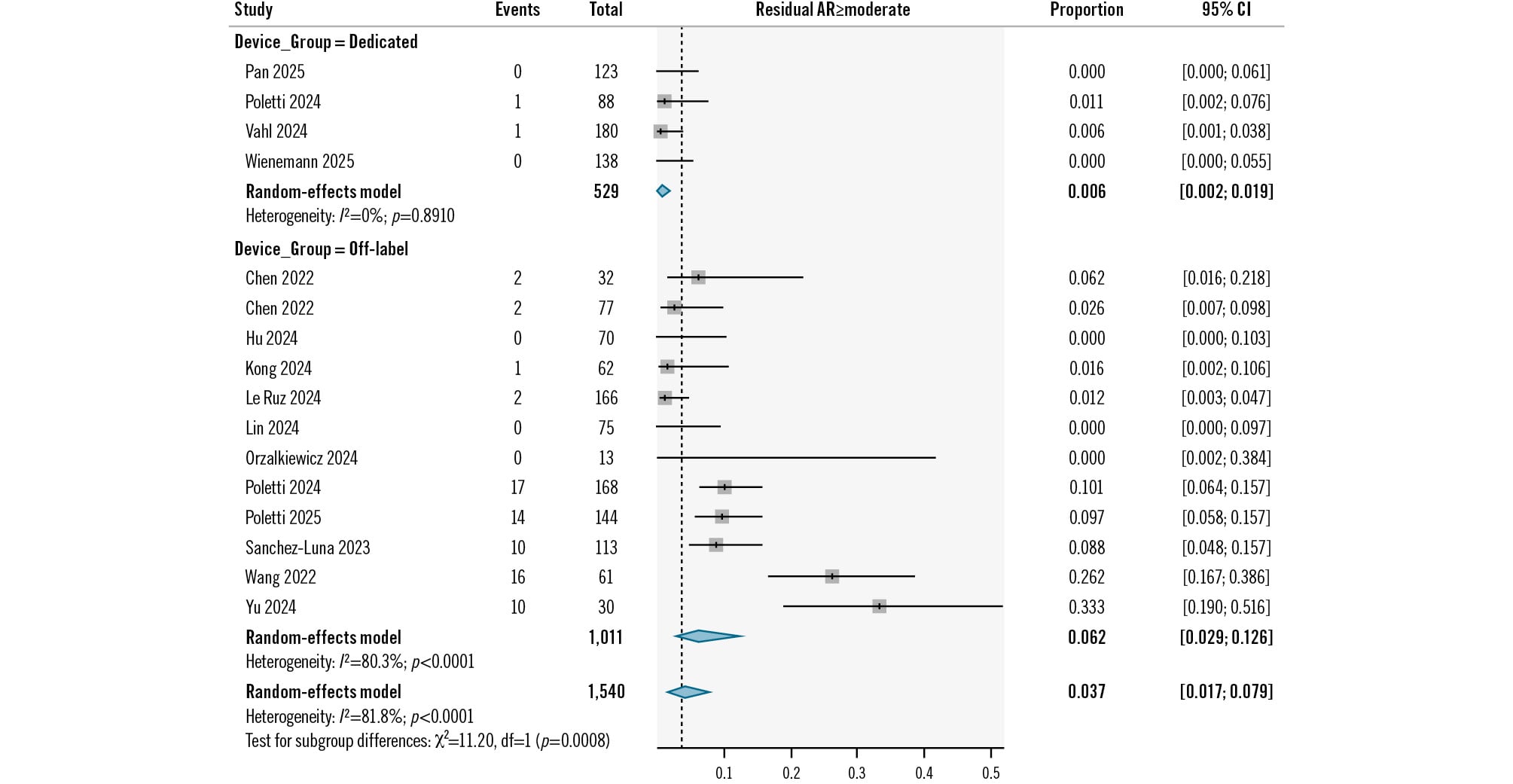
Figure 4. Forest plot of pooled key outcomes with significant subgroup differences between dedicated and off-label devices – residual aortic regurgitation ≥moderate. Residual aortic regurgitation ≥moderate on postprocedural echocardiography. All analyses used random-effects models with REML estimation. The diamonds represent the pooled estimates. The study references are listed in Table 1. AR: aortic regurgitation; CI: confidence interval; I²: heterogeneity statistic; REML: restricted maximum likelihood
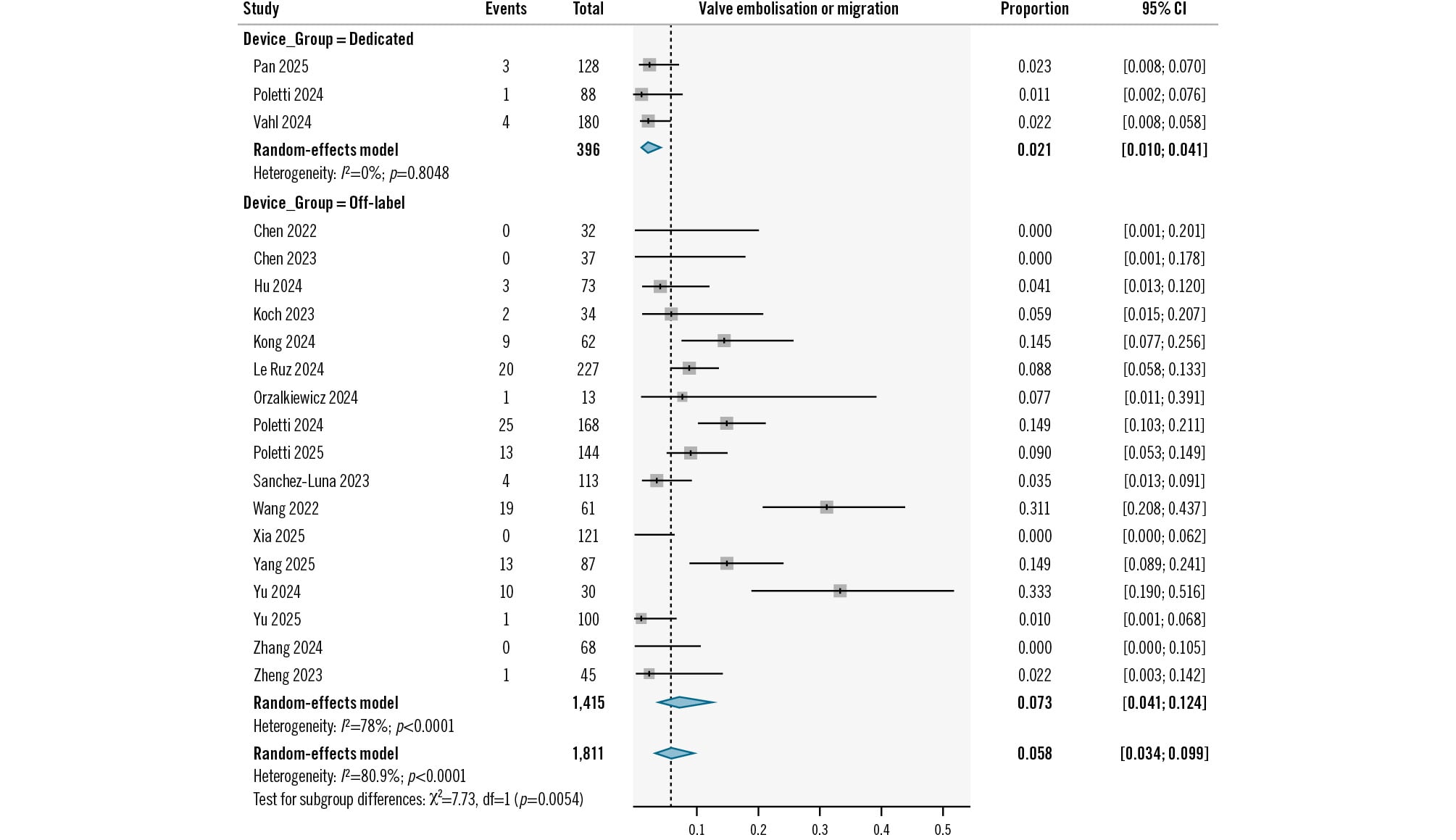
Figure 5. Forest plot of pooled key outcomes with significant subgroup differences between dedicated and off-label devices – valve embolisation or migration. Valve embolisation or migration. All analyses used random-effects models with REML estimation. The diamonds represent the pooled estimates. The study references are listed in Table 1. CI: confidence interval; I²: heterogeneity statistic; REML: restricted maximum likelihood
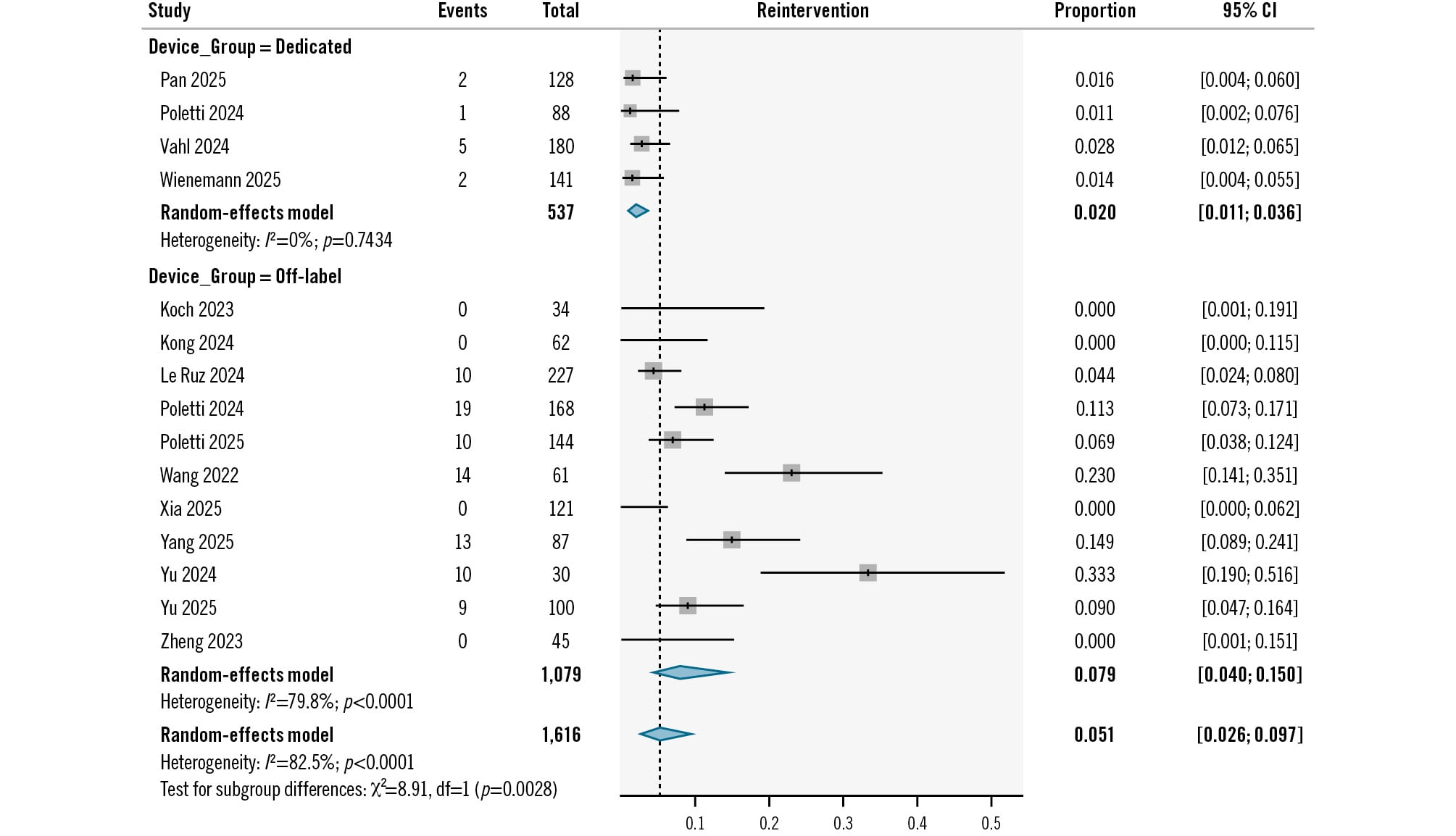
Figure 6. Forest plot of pooled key outcomes with significant subgroup differences between dedicated and off-label devices – reintervention. Reintervention comprises any repeat procedure on the index valve. All analyses used random-effects models with REML estimation. The diamonds represent the pooled estimates. The study references are listed in Table 1. CI: confidence interval; I²: heterogeneity statistic; REML: restricted maximum likelihood
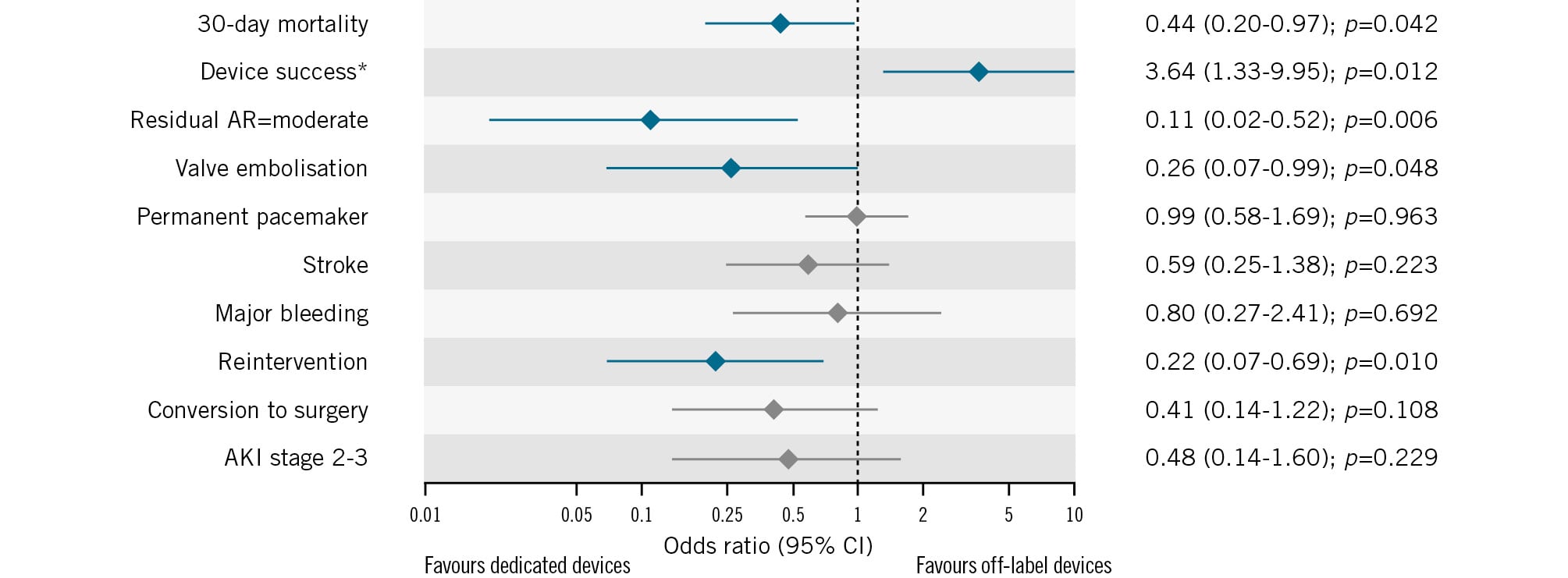
Figure 7. Summary forest plot of comparative odds ratios for all outcomes: dedicated versus off-label devices. Summary forest plot of comparative odds ratios for all outcomes between dedicated and off-label transcatheter devices. Pooled event rates per subgroup are shown alongside each outcome. Estimates are derived from mixed-effects meta-regression with device category as the moderator variable and REML estimation. *Device success OR >1 favours dedicated devices; for all other outcomes, OR <1 favours dedicated devices AKI: acute kidney injury; AR: aortic regurgitation; CI: confidence interval; OR: odds ratio; REML: restricted maximum likelihood
Meta-regression
Univariable meta-regression for 30-day mortality identified two significant predictors of 30-day mortality. Increasing age was associated with higher mortality (coefficient 0.10 per year, 95% CI: 0.02-0.18; p=0.016; R2=81.2%), whilst higher LVEF was associated with lower mortality (coefficient –0.08 per percentage point, 95% CI: –0.16 to –0.01; p=0.030; R2=72.6%). The mean STS score (p=0.12) and aortic annulus diameter (p=0.27) were not significantly associated with mortality.
Sensitivity analyses
Sensitivity analyses confirmed the robustness of the primary mortality finding. Excluding studies with <20 patients (17 cohorts, 2,420 patients) yielded similar results (dedicated 1.9% vs off-label 4.3%; p=0.031). Restricting analysis to studies with 100% transfemoral access (15 cohorts, 2,045 patients) maintained the observed difference (dedicated 1.9% vs off-label 4.2%; p=0.032).
Restricting device success to the 14 cohorts using VARC-3 criteria confirmed an overall rate of 87.4% (95% CI: 82.4-91.2), and the subgroup difference between device types remained significant (dedicated 95.5% vs off-label 86.4%; p=0.028), though only one dedicated device cohort used VARC-3 criteria. Too few VARC-2 cohorts (n=2) were available for formal subgroup analysis. When restricted to VARC-3 cohorts (10 cohorts), residual AR ≥moderate showed an overall rate of 5.4% (95% CI: 2.6-11.3%), with a numerically lower rate for dedicated devices versus off-label devices (1.1% vs 6.3%) that did not reach significance (p=0.102).
Publication bias
Funnel plot asymmetry was detected for 30-day mortality, device success, and PPI, suggesting potential small-study effects or selective reporting.
Discussion
This systematic review of contemporary transfemoral TAVI for PNAR demonstrates pooled 30-day mortality of 3.3%, device success of 87.7%, and stroke rates of 2.6%. Dedicated devices achieved superior outcomes compared with off-label devices: lower mortality, higher device success, reduced residual AR ≥moderate, fewer valve embolisations, and lower reintervention rates. PPI, stroke, and bleeding rates were similar across device types. Meta-regression identified increasing age and reduced LVEF as mortality predictors, whilst surgical risk scores showed no association. Findings remained robust across all sensitivity analyses.
PNAR presents unique anatomical and haemodynamic challenges for transcatheter valve replacement. Off-label devices, designed for aortic stenosis, have historically had lower device success rates, as they rely on annular and leaflet calcification for mechanical fixation and fluoroscopic landmarks.14 In PNAR, the annulus is often elliptical, dilatated, and non-calcified, removing anchoring points and visual landmarks, which results in difficulties with device stability and positioning. Consequently, this contributes to higher levels of embolisation, paravalvular leakage, and overall lower device success.
Dedicated devices for PNAR circumvent some of these issues through various anchoring mechanisms including the use of leaflet-engaging locators and enhanced sealing skirts.15 The ability to anchor the device onto a non-calcified, dilatated aortic root helps maintain commissural alignment and provide an effective seal to minimise paravalvular leakage and reduce embolisation even in the presence of a large stroke volume and regurgitant backflow.8
Our findings align with a previous meta-analysis which reported 30-day mortality of 3% for dedicated devices versus 9% for off-label devices.12 Three methodological differences are worth highlighting. Samimi and colleagues included mixed-access approaches (transfemoral, transapical, transcarotid, and transsubclavian) and extended their search to 2014, incorporating earlier device generations; their analysis also included the J-Valve, delivered via transapical access in published studies. By contrast, our exclusive focus on transfemoral access and restriction to studies from 2020 onwards eliminates confounding from higher-morbidity access routes and earlier-generation devices. The lower off-label mortality in our analysis (4.1% vs their 9%) likely reflects these methodological distinctions. Both analyses converge on the central finding that dedicated devices confer superior procedural success and lower short-term mortality, and our provision of direct comparative effect sizes (OR 0.45, 95% CI: 0.20-1.00 for mortality) quantified this advantage in a contemporary transfemoral-only context.
Patient selection should prioritise high-risk surgical candidates where TAVI offers mortality rates comparable to aortic stenosis outcomes. Results support cautious expansion to intermediate-risk patients, though randomised trials remain ongoing. Device selection should favour dedicated platforms given the superior procedural success and lower embolisation rates. Valve sizing requires 10-20% oversizing in non-calcified anatomy to ensure adequate anchoring whilst minimising conduction disturbances. Integration of these considerations into multidisciplinary Heart Team decision-making ensures appropriate patient selection, device choice, and expectations.
The association between increasing age and mortality likely reflects frailty and diminished physiological reserve. A preserved LVEF exerted protective effects, suggesting better adaptation to acute afterload changes post-implantation. The absence of an association with the STS score highlights the potential limitations of surgical risk models developed for open heart surgery when applied to transcatheter treatment of pure AR. These findings underscore the need for TAVI-specific risk tools that incorporate anatomical parameters – such as annular diameter, calcification degree, and root geometry – which influence procedural success.
Consistency across the sensitivity analyses strengthens confidence in our findings. Excluding studies with <20 patients yielded identical results, whilst restriction to 100% transfemoral access maintained dedicated device superiority. Funnel plot asymmetry suggests potential small-study effects or selective reporting, though the magnitude and direction of treatment effects remained robust. The biological plausibility of dedicated device superiority provides mechanistic support to statistical associations, and consistent findings across independent registries mitigate concerns.
Limitations
The comparison between dedicated and off-label devices is indirect, derived from predominantly single-arm cohorts, and subject to unmeasured confounding in patient selection and operator experience. Follow-up was predominantly short-term, which is insufficient to assess valve durability – a particularly relevant consideration given that PNAR patients are typically younger than AS populations. Device success definitions varied across studies (VARC-2, VARC-3, or custom criteria); sensitivity analysis restricted to VARC-3 cohorts yielded consistent findings. Funnel plot asymmetry for several outcomes suggests possible small-study effects. The majority of off-label cohorts originated from Asia, which may limit generalisability. The dedicated device evidence is confined to two platforms (JenaValve Trilogy and Hanchor Valve), as J-Valve data were exclusively transapical, and limited granular procedural and imaging data precluded subgroup analysis beyond broad device categories.
Conclusions
Contemporary transfemoral TAVI for pure native aortic regurgitation achieves acceptable safety and efficacy. Dedicated devices demonstrated lower mortality, higher device success, less residual regurgitation, fewer valve embolisations, and lower reintervention rates compared with off-label devices. These findings support the preferential use of dedicated platforms in selected patients, though randomised trials with extended follow-up remain essential.
Impact on daily practice
For Heart Teams evaluating patients with pure aortic regurgitation who are at elevated surgical risk, our data support the preferential selection of dedicated aortic regurgitation platforms for transfemoral transcatheter aortic valve implantation, given their higher procedural success, lower embolisation rates, and reduced residual regurgitation. Permanent pacemaker implantation remains frequent regardless of device type and should be discussed during the consent process. Patient selection should integrate age and left ventricular function, both identified as predictors of 30-day mortality in meta-regression.
Conflict of interest statement
J.K.F. Hon reports reception of speaker honoraria from Edwards Lifesciences and Medtronic. The other authors have no conflicts of interest to declare.