As percutaneous coronary revascularisation techniques continue to evolve, stents have naturally become a central target of innovation – not solely to maintain coronary patency but also to address the underlying mechanisms of tissue injury and local inflammatory response. Consequently, drug-eluting stents (DES) have become the gold standard in coronary interventions, utilising antiproliferative agents designed to suppress restenosis and promote more favourable endothelial healing. Among these, sirolimus-eluting stents (SES) and stents eluting its derivatives – such as the more lipophilic biolimus – have gained prominence for their potential to inhibit neointimal proliferation more effectively.12
Biologically, sirolimus is a naturally macrolide lactone isolated from Streptomyces hygroscopicus, which exerts its antiproliferative effect by inhibiting muscle cell proliferation and migration through early blockade of the mammalian target of rapamycin (mTOR) pathway. As a result, it induces G1 cell-cycle blockade.1 Accordingly, this mechanism solidified sirolimus as a foundational agent in the first generation of drug-eluting stents. Nonetheless, certain limitations remain, particularly regarding delayed vascular healing and increased thrombotic risk associated with the inflammation induced by durable polymers. These concerns have prompted the search for novel drug formulations with improved safety and performance profiles.2
In response to these challenges, biolimus has emerged as a promising pharmacological alternative. Structurally, it is a semisynthetic derivative of sirolimus, modified with a butyl group at the C40 position, which enhances its lipophilicity. Therefore, it demonstrates superior lipid membrane compatibility, allowing for deeper vascular wall penetration and prolonged local retention while simultaneously reducing systemic exposure.34 Consequently, biolimus has frequently been paired with biodegradable stent platforms, aiming to minimise restenosis rates and optimise long-term outcomes.45 Thus, these developments have positioned biolimus-eluting stents (BES) as a potentially superior alternative in the context of long-term percutaneous interventions.
Despite these advances, the clinical distinction between sirolimus- and biolimus-eluting stents remains a subject of ongoing debate.6 Hence, a systematic and evidence-based comparison is essential to elucidate their relative therapeutic value. Therefore, the present systematic review and meta-analysis aim to evaluate clinical outcomes through randomised controlled trials, thereby contributing to the current existing literature and informing future haemodynamic strategies based on robust comparative data.
Methods
This systematic review and meta-analysis was conducted in full accordance with the methodological standards outlined in the Cochrane Handbook for Systematic Reviews of Interventions and adhered to the 2020 PRISMA reporting guidelines. The study protocol was prospectively registered in the PROSPERO database (CRD420251119555).78
Search strategy
The search was carried out independently by two authors (R.F.O. Suruagy-Motta and L.D. da Silva) in the databases PubMed/MEDLINE, Cochrane, Web of Science, Embase, and Scopus, including studies that had a comparison between biolimus- and sirolimus-eluting stents in coronary interventions. The search strategy was constructed using Boolean logic, in which the operators “AND” and “OR” were employed to link the key terms: drug-eluting stents, stent, biolimus, sirolimus, percutaneous coronary intervention, and randomised controlled trial.
Eligibility criteria
Inclusion criteria
The guiding question of this systematic review was defined as follows: “in patients with coronary lesions, which eluting stent is more safe and effective, a biolimus-eluting stent or a sirolimus-eluting stent?” This research question was structured according to the PICOTT model,910 encompassing the following elements:
Population (P): individual presenting coronary artery disease undergoing percutaneous coronary intervention (PCI) with stent implantation
Intervention (I): biolimus-eluting stent
Comparison (C): sirolimus-eluting stent
Outcomes (O): all-cause mortality, cardiac death, major adverse cardiovascular events (MACE), stent thrombosis, target lesion revascularisation, myocardial infarction
Type of study (T): randomised controlled trials (RCTs)
Time (T): early-stage outcomes (<1 year) and midterm outcomes (1-5 years).
Exclusion criteria
The exclusion parameters applied in this review were the following: (1) non-randomised studies; (2) studies not involving patients in coronary interventions; (3) studies that addressed only patients with in-stent restenosis; (4) studies that had other limus-eluting stents in the intervention group, such as everolimus or ridaforolimus; (5) studies with insufficient outcome reporting. In addition, single-case descriptions, narrative or systematic reviews, congress abstracts, and any non-original research material were excluded from the final selection.
Study selection
During the first stage of selection, titles and abstracts were examined to identify studies relevant to the research question, with no filters applied regarding publication year or language. All citations retrieved from the databases were uploaded into the Rayyan web application (https://www.rayyan.ai)11 to facilitate blinded evaluation. Duplicate records were automatically detected and manually verified before removal. Subsequently, studies deemed unrelated to the scope of the review were excluded. The screening process was conducted independently by two investigators (G.R. Neves and L.G. Oldra), and any disagreements were discussed and resolved in consultation with a third reviewer (R.F.O. Suruagy-Motta).
Endpoints and definitions
The primary endpoint was mortality, including cardiac death and all-cause mortality, at 1 year and 5 years of follow-up. Other cardiovascular endpoints were also evaluated, such as MACE (defined by a composite of cardiac death, non-fatal myocardial infarction, and target vessel revascularisation), myocardial infarction, stent thrombosis, and target lesion revascularisation (TLR).
Data extraction
Information from each eligible study was systematically collected according to predefined inclusion criteria, encompassing authorship, publication year, study location, study design, sample size, mean age, participant characteristics, stent type, postoperative pharmacotherapy, follow-up duration, and principal outcomes. Data extraction and management were performed independently by two investigators (P.A.M.G. de Sousa and C.A. Farias), with all entries organised in a structured Excel (Microsoft) database. Any inconsistencies or uncertainties were discussed and resolved in agreement with a third reviewer (R.F.O. Suruagy-Motta).
Quality assessment
The risk-of-bias assessment was performed separately by two authors (R.F.O. Suruagy-Motta and L.D. da Silva) using the Risk of Bias 2 (RoB 2) tool for randomised controlled trials,12 assessing the randomisation process, deviations from interventions, missing outcome data, measurement of outcome, and selection of the reported result; any overall disagreements in the process were resolved through discussion or consultation with a third author (P.A.M.G. de Sousa).
Statistical analysis
Treatment effects for categorical outcomes were expressed as risk ratios (RRs) with 95% confidence intervals (CIs). Each outcome was analysed and evaluated through the I2 statistic test: if I2 >25%, it was considered significant; if I2 <25%, it was considered low. In the presence of substantial heterogeneity, a random-effects model incorporating the Hartung-Knapp adjustment was used to yield more conservative and robust pooled estimates. Statistical analyses were conducted using RStudio (R Foundation for Statistical Computing).13
Results
Studies selected
The database search retrieved 1,202 citations in total, distributed as follows: PubMed (n=149), Embase (n=98), Web of Science (n=509), Scopus (n=226), and Cochrane Library (n=220). After the automatic and manual removal of 748 duplicate entries, 454 unique records were retained for the initial title- and abstract-level screening. From these, 23 studies were reviewed in full text, and ultimately six randomised trials satisfied the eligibility criteria and were incorporated into the quantitative synthesis, representing 12,109 participants overall.141516171819 The complete selection workflow is depicted in Figure 1.
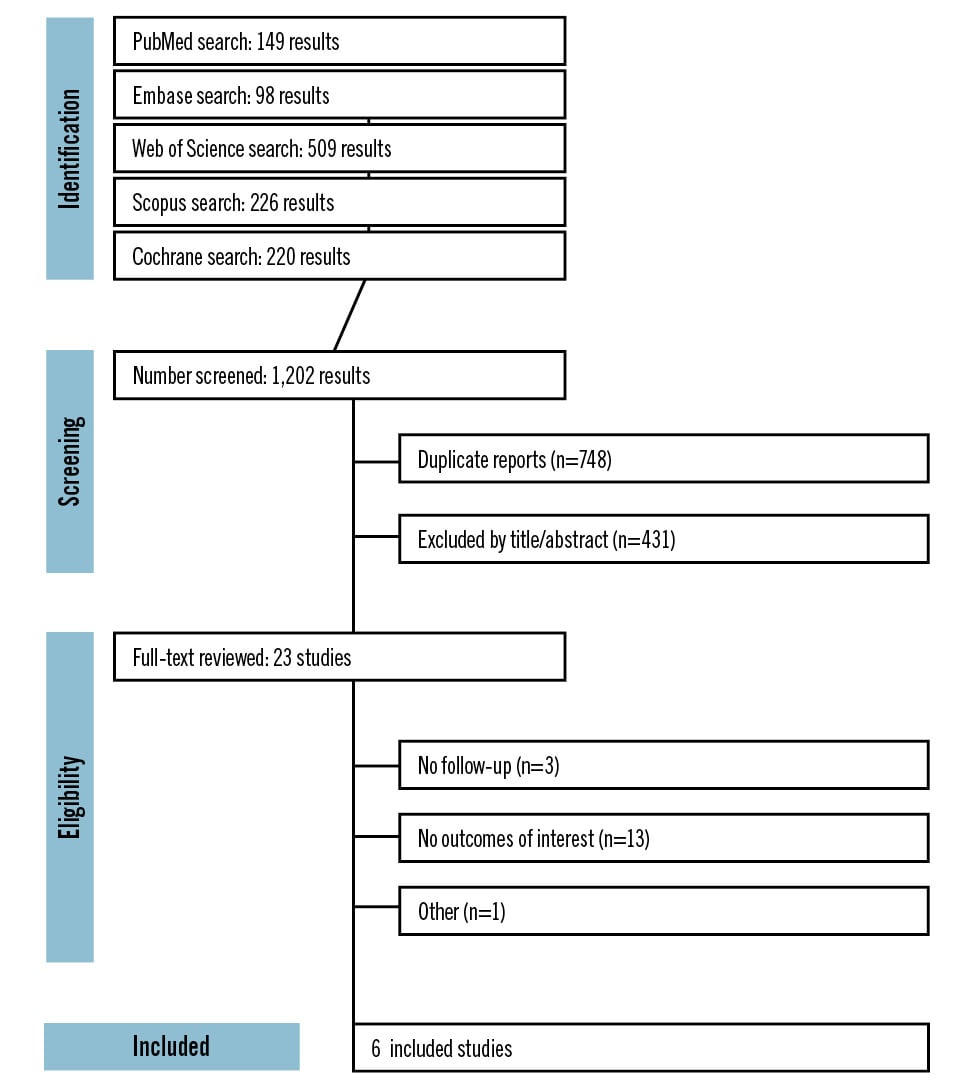
Figure 1. PRISMA flowchart. PRISMA flow diagram summarising the identification, screening, eligibility assessment, and final inclusion of studies. PRISMA: Preferred Reporting Items for Systematic Reviews and Meta-Analyses
Baseline characteristics
Table 1 summarises the baseline characteristics of patients included in the selected randomised clinical trials comparing biolimus- and sirolimus-eluting stents. Across studies, patient populations were predominantly male, with mean ages ranging from approximately 63 to 67 years. Common comorbidities included diabetes, hypertension, and hypercholesterolaemia. The proportion of patients with a history of myocardial infarction, prior PCI, or coronary artery bypass grafting (CABG) varied between studies, reflecting diverse cardiovascular risk profiles.
The architectural design, strut thickness, and polymer coatings of the evaluated devices varied chronologically across the included trials. In the earlier studies (Kadota et al in 2012, LEADERS in 2011, and SORT OUT V in 2013),141516 the intervention group evaluated first-generation biolimus-eluting stents (Nobori [Terumo] or BioMatrix Alpha [Biosensors International Group]), which featured thick stainless-steel struts (120 μm) combined with a biodegradable poly(lactic acid; PLA) polymer applied exclusively to the abluminal surface. In contrast, their respective control arms utilised first-generation sirolimus-eluting stents (Cypher or Cypher Select+ [Cordis]), characterised by thicker stainless-steel struts (140 μm) encapsulated by a durable polymer matrix (polyethylene-co-vinyl acetate [PEVA]/poly-n-butyl methacrylate [PBMA]) with a conformal (360-degree) coating. In the subsequent contemporary trials, device profiles transitioned towards thinner geometries and modified carrier platforms. In SORT OUT VII (2024),17 the control arm shifted to the ultrathin-strut (60 μm) cobalt-chromium Orsiro (Biotronik) SES, which features an abluminal biodegradable polymer (poly-L-lactic acid [PLLA]). The intervention arms also evolved in SORT OUT IX (2025)18 and SORT OUT XI (2025),19 evaluating polymer-free BES platforms (BioFreedom and BioFreedom Ultra [both by Biosensors International Group]) that deliver biolimus directly from a microstructured metallic surface, with strut profiles refining from 120 μm stainless-steel to ultrathin 84 μm cobalt-chromium configurations, respectively.
Table 1. Baseline characteristics of the studies and patients.
| Author/ Study name, year | Country | Study design | Follow-up time, years | Sample size | Intervention: bio/siro | Male | Age, years | Diabetes | Hypertension | Hypercholesterolaemia | Previous MI | Previous PCI | Previous CABG |
|---|---|---|---|---|---|---|---|---|---|---|---|---|---|
| Kadota et al, 201214 |
Japan | RCT | 5 | 326 | 194/132 | 139/95 | 67.1±10.3/ 67.7±9.3 | 75/52 | 149/111 | 150/108 | 40/28 | 63/51 | 1/4 |
| LEADERS, 201115 | Multicentre | RCT | 4 | 1,707 | 857/850 | 643/634 | 64.6±10.8/ 64.5±10.7 | 223/191 | 630/618 | 560/580 | 276/227 | 312/312 | 90/107 |
| SORT OUT V, 201316 | Denmark | RCT | 1 | 2,468 | 1,229/1,239 | 917/930 | 65.0±10.6/ 65.2±10.3 | 185/189 | 682/653 | 710/730 | 209/206 | 205/196 | 96/71 |
| SORT OUT VII, 202417 | Denmark | RCT | 5 | 1,329 | 674/655 | 525/495 | 63.7±11.5/ 65.1±11.3 | 114/106 | 302/310 | 270/262 | 103/83 | 102/83 | 32/31 |
| SORT OUT IX, 202518 | Denmark | RCT | 5 | 3,151 | 1,572/1,579 | 1,219/1,221 | 66.4±10.7/ 66.1±11.1 | 304/303 | 893/850 | 830/777 | 224/234 | 322/311 | 130/108 |
| SORT OUT XI, 202519 | Denmark | RCT | 1 | 3,136 | 1,566/1,570 | 1,221/1,228 | 66.8±10.4/ 66.4±10.8 | 299/295 | 836/867 | – | 201/210 | 261/293 | 87/86 |
| Values are n or mean±SD. Data are presented as biolimus-eluting stent group/sirolimus-eluting stent group. bio: biolimus; CABG: coronary artery bypass grafting; MI: myocardial infarction; PCI: percutaneous coronary intervention; RCT: randomised clinical trial; SD: standard deviation; siro: sirolimus | |||||||||||||
Outcomes
Cardiac death
In early outcomes (≤1 year), BES were associated with a significant 30% reduction in cardiac death compared with SES (RR 0.70, 95% CI: 0.52-0.93; p=0.015; I2=0%) (Figure 2A). For midterm outcomes (1-5 years), based on three trials involving 6,111 patients (3,063 BES and 3,048 SES), cardiac death rates were similar between groups (RR 1.09, 95% CI: 0.85-1.40; p=0.495) (Figure 2B), with no observed heterogeneity (I2=0%).
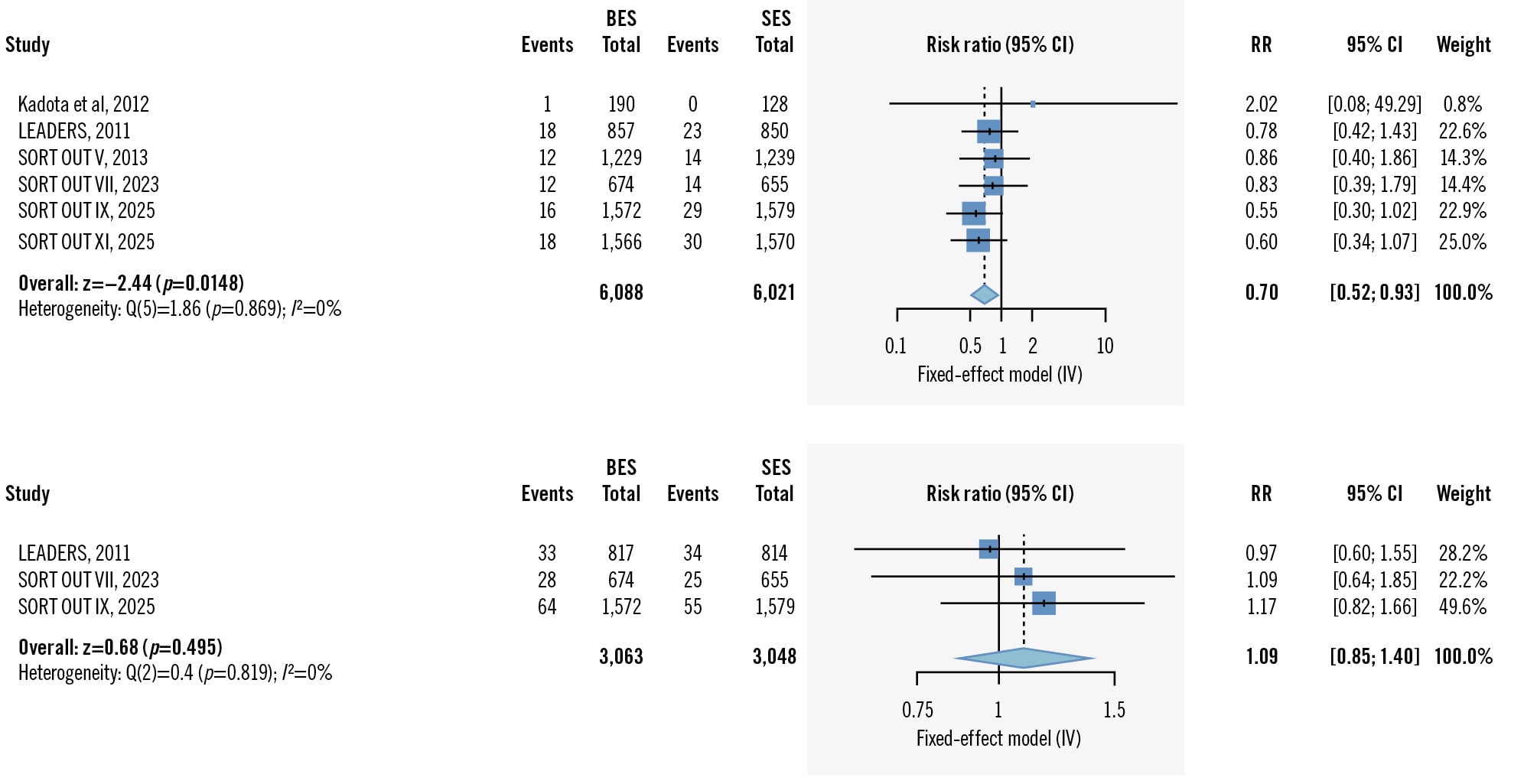
Figure 2. Cardiac death rates. A) Cardiac death rates at 1 year. B) Cardiac death rates between 1 and 5 years. Forest plots compare BES and SES. Blue squares represent the RR of each individual trial, with the square size proportional to the study’s weight in the pooled estimate; horizontal lines represent the 95% CI of each estimate. The diamond represents the pooled RR and its 95% CI, calculated using a common-effect (fixed-effect) model when heterogeneity was low (I2 of 25% or less) or a random-effects model when heterogeneity was substantial (I2 above 25%), as described in the Methods. Trial references are listed in Table 1. BES: biolimus-eluting stent; CI: confidence interval; I²: heterogeneity index; RR: risk ratio; SES: sirolimus-eluting stent
All-cause mortality
A non-significant 19% reduction in all-cause mortality was observed with BES at early follow-up (RR 0.81, 95% CI: 0.64-1.01; p=0.058; I2=0%) (Figure 3A). At 5 years (3 studies, 3,063 BES and 3,048 SES), all-cause mortality remained similar between groups (RR 1.09, 95% CI: 0.93-1.28; p=0.283; I2=0%) (Figure 3B).
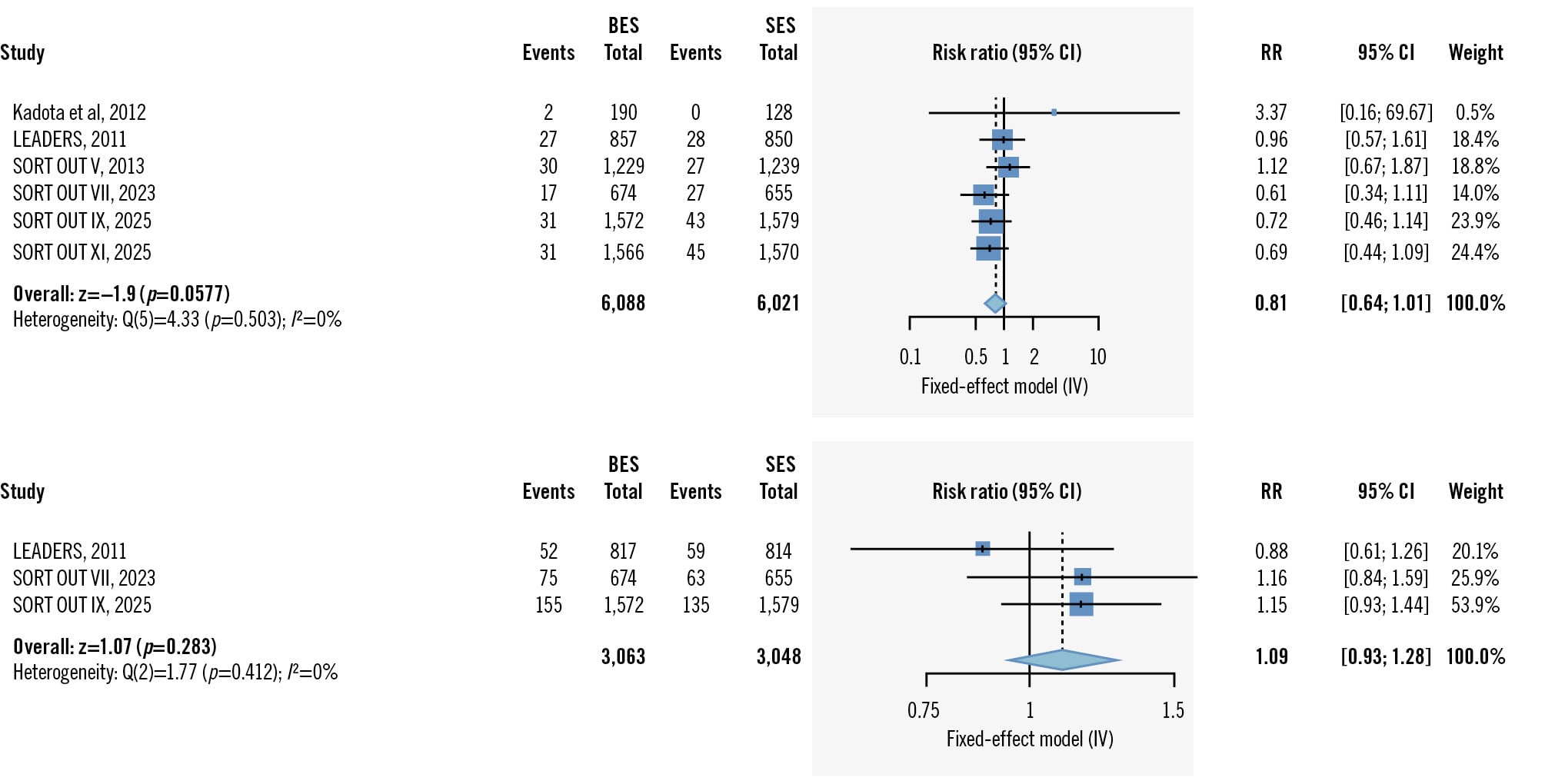
Figure 3. All-cause mortality rates. A) All-cause mortality rates at 1 year. B) All-cause mortality rates between 1 and 5 years. See Figure 2 legend for explanation of forest plots and Table 1 for trial references. BES: biolimus-eluting stent; CI: confidence interval; I2: heterogeneity index; RR: risk ratio; SES: sirolimus-eluting stent
Major adverse cardiovascular events
Five trials enrolling 8,973 patients (4,522 in BES and 4,451 in SES) showed similar MACE rates at ≤1 year (RR 0.95, 95% CI: 0.85-1.07; p=0.44; I2=0%) (Figure 4A). For outcomes between 1 and 5 years (3 studies, 2,995 BES vs 2,972 SES), MACE rates remained comparable (RR 0.98, 95% CI: 0.59-1.63; p=0.90; I2=64%) (Figure 4B).
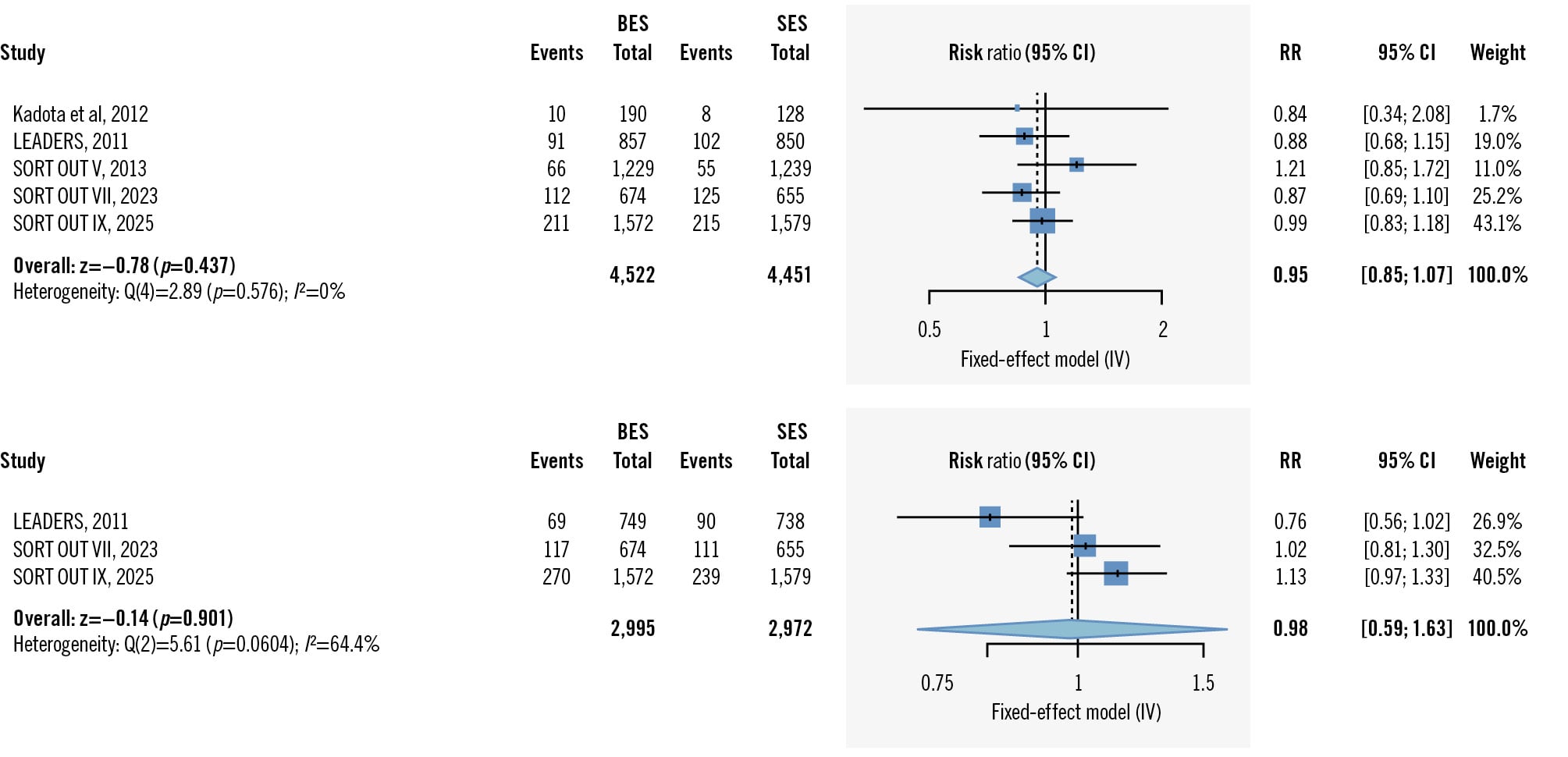
Figure 4. MACE rates. A) MACE rates at 1 year. B) MACE rates between 1 and 5 years. See Figure 2 legend for explanation of forest plots and Table 1 for trial references. BES: biolimus-eluting stent; CI: confidence interval; I2: heterogeneity index; MACE: major adverse cardiovascular events; RR: risk ratio; SES: sirolimus-eluting stent
Myocardial infarction
Six studies reported myocardial infarction outcomes, showing no significant difference at early follow-up (RR 1.17, 95% CI: 0.94-1.45; p=0.16; I2=0%) (Figure 5).
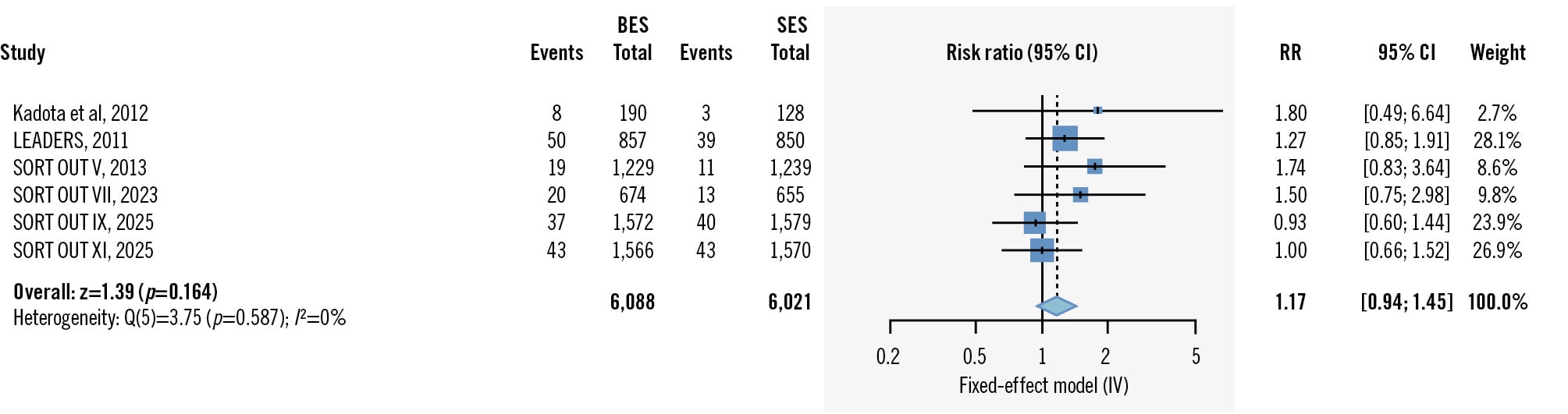
Figure 5. Myocardial infarction rates. See Figure 2 legend for explanation of forest plots and Table 1 for trial references. BES: biolimus-eluting stent; CI: confidence interval; I2: heterogeneity index; RR: risk ratio; SES: sirolimus-eluting stent
Target lesion revascularisation
TLR rates were comparable at ≤1 year across all six studies (RR 1.29, 95% CI: 0.68-2.47; p=0.36; I2=74%) (Figure 6A). Between 1 and 5 years (3 studies, 3,016 BES vs 2,991 SES), results remained similar (RR 0.91, 95% CI: 0.46-1.78; p=0.60; I2=43%) (Figure 6B).
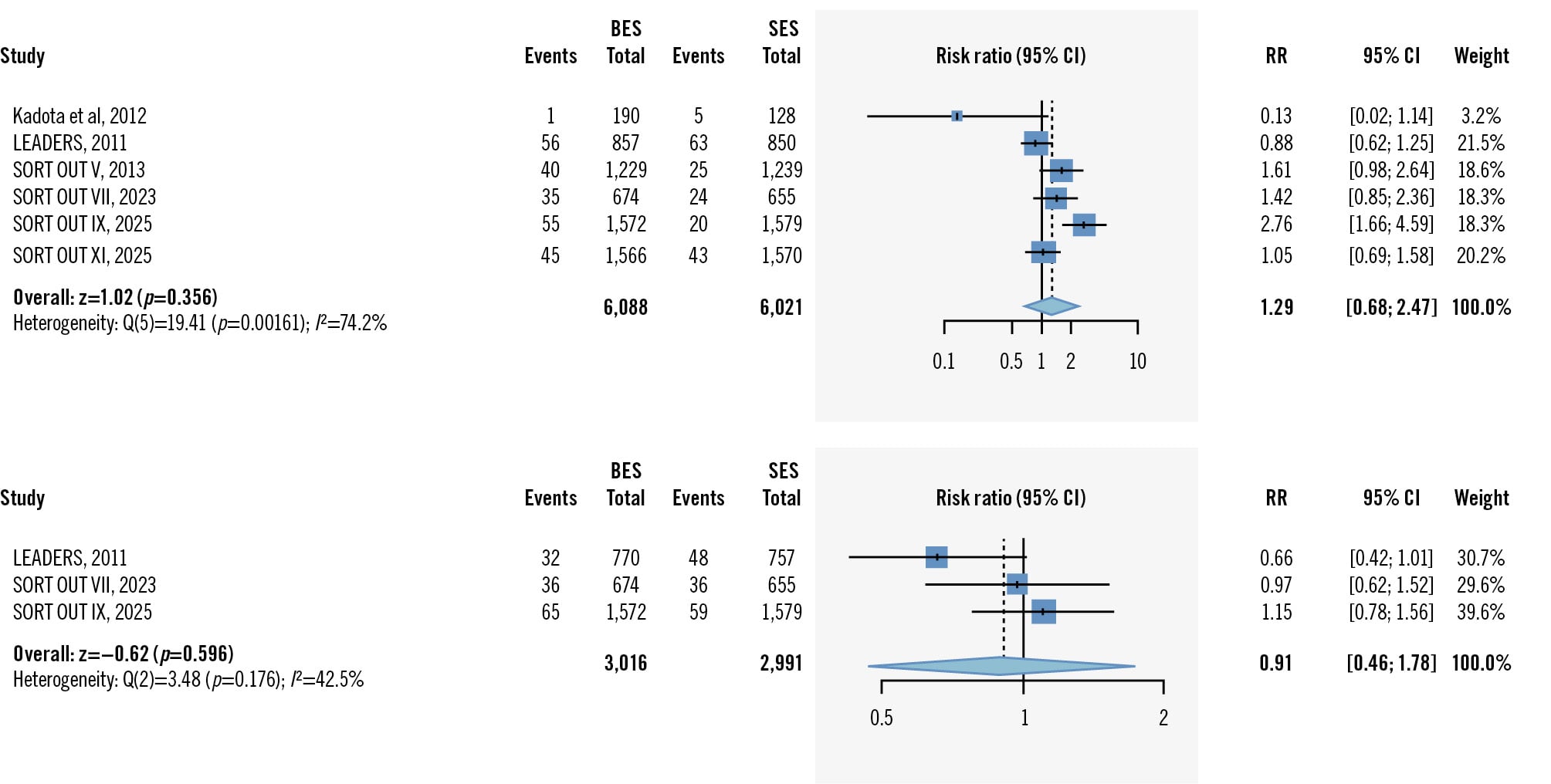
Figure 6. TLR rates. A) TLR rates at 1 year. B) TLR rates between 1 and 5 years. Forest plots compare BES and SES. See Figure 2 legend for explanation of forest plots and Table 1 for trial references. BES: biolimus-eluting stent; CI: confidence interval; I2: heterogeneity index; RR: risk ratio; SES: sirolimus-eluting stent; TLR: target lesion revascularisation
Stent thrombosis
All studies reported on stent thrombosis, showing a non-significant early excess with BES (RR 1.85, 95% CI: 0.79-4.34; p=0.12; I2=44%) (Figure 7A). However, from 1 to 5 years (3 studies, 3,103 BES vs 3,084 SES), BES were associated with a significant 46% reduction in stent thrombosis (RR 0.54, 95% CI: 0.33-0.88; p=0.014; I2=0%) (Figure 7B).
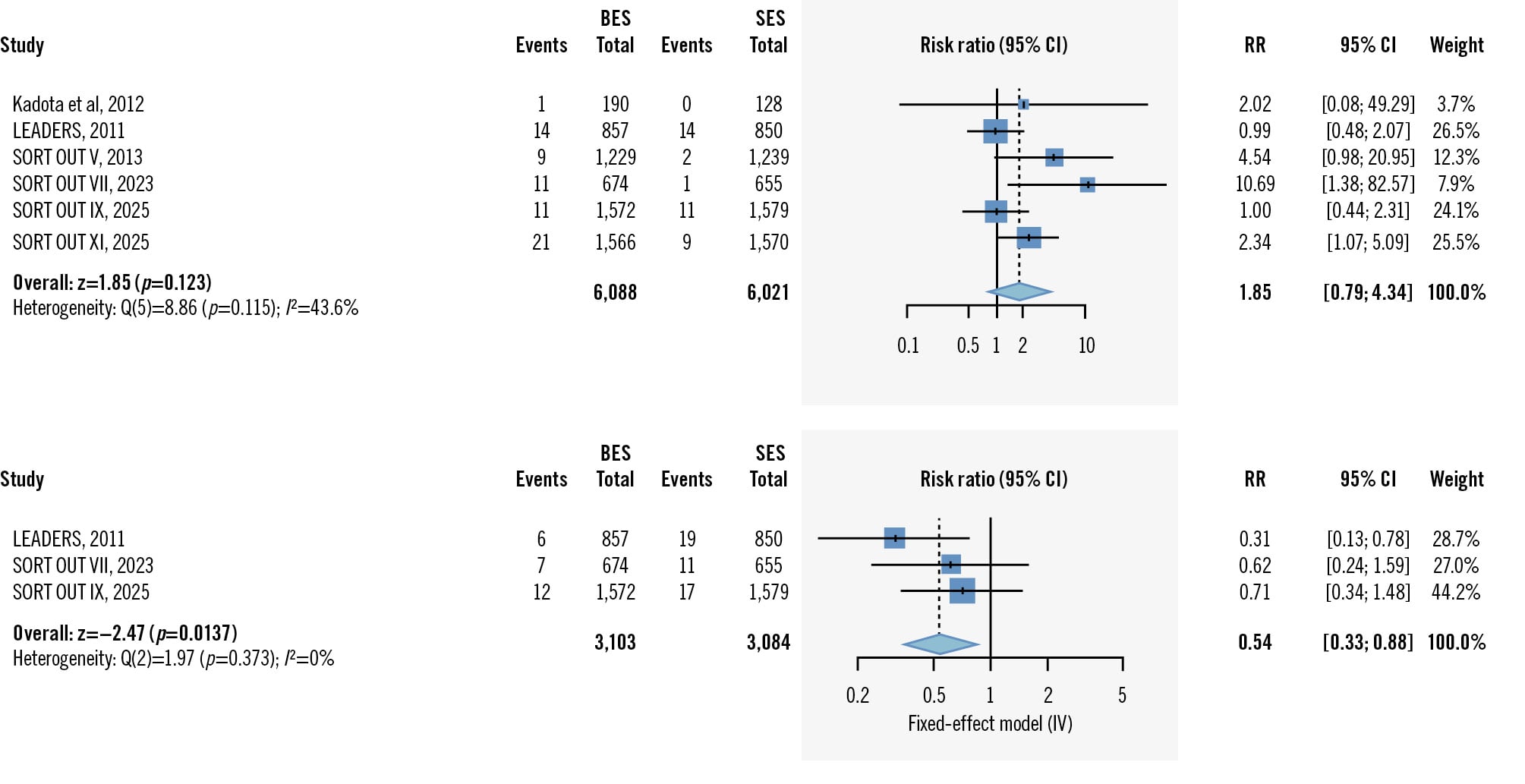
Figure 7. Stent thrombosis rates. A) Stent thrombosis rates at 1 year. B) Stent thrombosis rates between 1 and 5 years. See Figure 2 legend for explanation of forest plots and Table 1 for trial references. BES: biolimus-eluting stent; CI: confidence interval; I2: heterogeneity index; RR: risk ratio; SES: sirolimus-eluting stent
Sensitivity analysis
Sensitivity analyses using the leave-one-out and funnel plots methods were performed to investigate sources of heterogeneity (Supplementary Figure 1, Supplementary Figure 2). For 1- to 5-year MACE outcomes, excluding the LEADERS (2011)15 trial reduced the heterogeneity to 0% (Supplementary Figure 2.3B). For 1-year stent thrombosis, excluding SORT OUT VII (2023)17 reduced the heterogeneity to 25.9% (Supplementary Figure 2.6A). For TLR at 1 year, removing SORT OUT IX (2025)18 led to a heterogeneity of 53.4% (Supplementary Figure 2.5A), and for 1- to 5-year outcomes, excluding LEADERS (2011)19 reduced the heterogeneity to 0% (Supplementary Figure 2.5B).
Quality assessment
All six RCTs were evaluated using the RoB 2 tool and consistently demonstrated a low risk of bias (Supplementary Figure 3), except for Kadota et al (2012) which exhibited a moderate risk, mainly due to heterogeneity in baseline characteristics. Although no statistically significant differences were reported between groups in this study, some variables, such as prior CABG surgery (p=0.07), were close to significance. Given the low number of outcome events in this trial, even marginal baseline differences could have influenced the observed results. Regarding publication bias, only the funnel plot for myocardial infarction at 5 years showed some asymmetry, which was supported by a significant Egger’s test (p=0.011), indicating possible small-study effects or publication bias. However, given the small number of studies included (n=3), the reliability of both the visual inspection and statistical tests for publication bias is limited. Despite these issues, the overall findings are likely robust, as the concerns do not seem to have significantly affected the primary outcomes.
Discussion
This systematic review and meta-analysis provide a contemporary and robust comparison between BES and SES, assessing both short- and long-term clinical outcomes based on six randomised controlled trials that enrolled 12,109 patients. In the short term (≤1 year), BES were associated with a significant 30% reduction in cardiac death and a non-significant trend towards lower all-cause mortality, while rates of myocardial infarction, MACE, and TLR were comparable between groups. Early stent thrombosis appeared slightly higher in the BES group, though this difference was not statistically significant. Over the long term (1-5 years), clinical outcomes such as cardiac death, all-cause mortality, MACE, and TLR remained similar; however, BES were associated with a significant 46% reduction in stent thrombosis, suggesting a long-term safety advantage.
The most striking difference between the two stent platforms was observed in cardiac mortality at short-term follow-up, with BES reducing this risk by 30% compared with SES. Even though the comparison for overall mortality failed to reach statistical significance, the trend favoured BES (RR 0.81; p=0.058), suggesting a potential survival benefit. This early reduction in cardiac death may be attributed to differences in vascular healing dynamics and overall biocompatibility between the two stent platforms. Biolimus A9 (Biosensors International Group) is a highly lipophilic sirolimus analogue, enhancing arterial tissue uptake and retention, potentially allowing for more efficient drug delivery to the vessel wall.20 When delivered via an abluminal coating on a biodegradable or polymer-free platform, this pharmacological profile may promote a more physiological endothelial recovery, with reduced inflammatory response and less fibrin deposition.21 These properties may collectively contribute to the observed early safety advantage of BES by facilitating more complete and rapid vascular healing.
An apparent paradox in our short-term findings warrants careful pathophysiological consideration: BES achieved a significant 30% reduction in cardiac mortality despite displaying a non-significant, numerical excess in early stent thrombosis (RR 1.85). Given that early thrombotic events are often catastrophic, this divergent trend is likely explained by the mechanical and biological limitations of the first-generation durable-polymer SES comparators used in the earlier trials. These legacy SES platforms featured thick stainless-steel struts (140 μm) and rigid durable polymers that frequently triggered severe local hypersensitivity, persistent fibrin deposition, and impaired coronary vasomotion. These combined factors could cause sudden, non-thrombotic ischaemic cardiac mortality. Conversely, the abluminal biodegradable polymer or polymer-free design of the evaluated BES platforms minimises this chronic hypersensitivity burden early on. In addition, because the absolute event rates for early stent thrombosis were exceptionally low across all cohorts, the minor numerical imbalance in acute thrombotic events did not offset the broader early survival benefit derived from the enhanced biocompatibility and rapid endothelial healing characteristics of the BES systems.
Furthermore, a distinct temporal effect was observed in our subanalysis, demonstrating that the early reduction in cardiac mortality was largely driven by contemporary, late-era trials published around 2025, such as SORT OUT IX and SORT OUT XI.1819 This chronological shift reflects the major iterative breakthroughs in stent architecture over the last decade. While earlier trials evaluated first-generation BES with thick stainless-steel platforms coated with biodegradable polymers, the 2025 trials investigated advanced polymer-free BES designs (BioFreedom and BioFreedom Ultra) that deliver biolimus directly from microstructured surfaces, accompanied by a reduction in strut thickness to 84 μm. By entirely eliminating the carrier polymer, these modern platforms completely bypass the transient local inflammatory phase traditionally caused by polymer degradation during the first year. This design allows for exceptionally rapid, high-quality re-endothelialisation and optimised local drug-elution dynamics. Consequently, this architectural evolution explains why the short-term survival benefit of BES became prominent and pronounced only in the contemporary era, even when evaluated against modern, ultrathin-strut SES comparators.1420212223
These safety advantages, however, appear to be time dependent. While BES were numerically associated with a higher risk of early stent thrombosis (RR 1.85; p=0.12), this difference was not statistically significant and may reflect a brief phase of thrombotic vulnerability during polymer resorption and incomplete endothelial coverage.22 Importantly, beyond the first year, BES conferred a 46% relative reduction in stent thrombosis (p=0.014), with consistent results across trials (I2=0%). However, it is important to note that most biolimus-eluting stents were combined with biodegradable polymers, making it difficult to disentangle the effects of the drug from those of the polymer.1420 This co-association introduces a potential bias, as the observed benefits may partly reflect the favourable biological response to a reduced polymer burden, such as lower inflammation and improved healing, rather than the drug alone. Supporting this, a recent meta-analysis showed a significant reduction in very late stent thrombosis with biodegradable-polymer DES compared with durable-polymer counterparts.23
In contrast, the efficacy endpoints for myocardial infarction, MACE, and TLR remained comparable between stents in both timeframes. Myocardial infarction rates were similar at early and midterm follow-up (RR 1.17 and 0.91, respectively), consistent with prior randomised trials demonstrating non-inferiority among newer-generation DES in preventing ischaemic complications.19 TLR rates also did not differ significantly between BES and SES, though a high degree of heterogeneity was observed in the early period (I2=74%). This variability likely reflects differences in trial populations and procedural factors rather than intrinsic differences between stent platforms. The neutrality in these endpoints highlights that both stents effectively suppress neointimal proliferation, which is expected given that both sirolimus and biolimus are potent mTOR inhibitors with established antirestenotic properties.
Furthermore, the temporal convergence of mortality rates after the first year, characterised by a late catch-up in mortality within the BES group, warrants physiological clarification. This phenomenon is primarily driven by the degradation kinetics of the biodegradable-polymer platforms. The localised biocompatibility advantages of BES are most pronounced during the first 6 to 12 months, a critical window when active polymer resorption occurs and standard durable polymers are most prone to inducing hypersensitivity and delayed endothelialisation. Once the biodegradable matrix is fully resorbed, the remaining metallic construct behaves similarly across advanced platforms, causing the initial survival curves to run parallel or converge over midterm follow-up. Additionally, late clinical outcomes beyond 1 year are increasingly dictated by systemic neoatherosclerosis and the natural progression of native coronary artery disease rather than device-specific components, which naturally dilutes the early localised safety benefits offered by the BES platform.1617181920212223
Beyond the observed outcomes, the clinical interpretation of these findings must also consider the heterogeneity in stent design, such as strut thickness, polymer type, and coating techniques, which represents an important confounding factor when comparing DES platforms. These structural characteristics can independently influence vascular healing, inflammation, and thrombotic risk, making it challenging to isolate the clinical impact of the antiproliferative drug alone. These considerations highlight the need for future studies using more standardised stent designs to better delineate the individual impact of the drug, polymer, and structural features on clinical endpoints.
Limitations
This study has several strengths, including the exclusive inclusion of randomised trials, stratification by follow-up duration, and low heterogeneity across most outcomes. However, some limitations warrant consideration. First, the SES comparators varied significantly between studies, encompassing different device generations with substantial heterogeneity in strut thickness, polymer composition (durable vs biodegradable), and coating techniques. This structural variation across control groups introduces a chronological and technical bias, as variations in mechanical profiles can independently impact vessel injury and long-term re-endothelialisation, making a uniform benchmark comparison challenging. Second, an inherent methodological limitation is the confounding interplay between the antiproliferative drug and its carrier platform. Because the evaluated BES technologies are coupled with biodegradable polymers, it is mathematically and clinically difficult to isolate whether the long-term safety benefits are driven by the specific properties of biolimus or by the gradual resorption of the polymer matrix. Third, the availability of long-term data was limited, as only three of the six trials provided midterm (1- to 5-year) outcomes. This reduction in sample size effectively halves the total evaluable patient population for the midterm period, limiting the statistical power to detect differences in rare but critical endpoints, such as late stent thrombosis. All of these factors may have directly influenced the clinical outcomes evaluated in this study. Fourth, a moderate risk of bias due to baseline characteristic imbalances was identified in one included trial (Kadota et al2012). Although this trial represents a small proportion of the overall cohort, its marginal baseline variations could have disproportionately influenced its specific endpoints due to a low absolute event rate, thereby introducing minor residual confounding to the pooled estimates.
Conclusions
This meta-analysis of six randomised trials demonstrates that, from a holistic perspective, BES and SES yield highly comparable overall outcomes, displaying equivalent efficacy in reducing myocardial infarction, MACE, and TLR across all time frames. Within this landscape of clinical similarity, BES exhibit targeted safety advantages, characterised by a significant early reduction in cardiac mortality and a substantial long-term reduction in stent thrombosis compared with SES. These findings highlight the clinical relevance of polymer biodegradability and drug release kinetics in shaping safety outcomes, without shifting the devices’ overall morbidity profile. Additional randomised investigations will be essential to isolate the effect of the drug itself by controlling structural stent factors, allowing a more accurate assessment of the clinical benefits attributable to the antiproliferative agent.
Impact on daily practice
This meta-analysis reveals a distinct, time-dependent clinical profile between these two platforms that directly refines daily practice. In the early phase (<1 year), biolimus-eluting stents (BES) provide a substantial reduction in cardiac mortality compared with sirolimus-eluting stents. Conversely, during midterm follow-up (1-5 years), the benefit of BES shifts to sustained safety. Clinically, these temporal trends dictate that strict adherence to dual antiplatelet therapy (DAPT) is essential during the initial months to bridge the polymer resorption window.
AI statement
Artificial intelligence (ChatGPT) was used to cross-verify the manual data extraction performed independently by two reviewers and to refine the technical English phrasing of the manuscript. The authors take full responsibility for the veracity of all data included in this paper.
Conflict of interest statement
The authors have no conflicts of interest to declare.